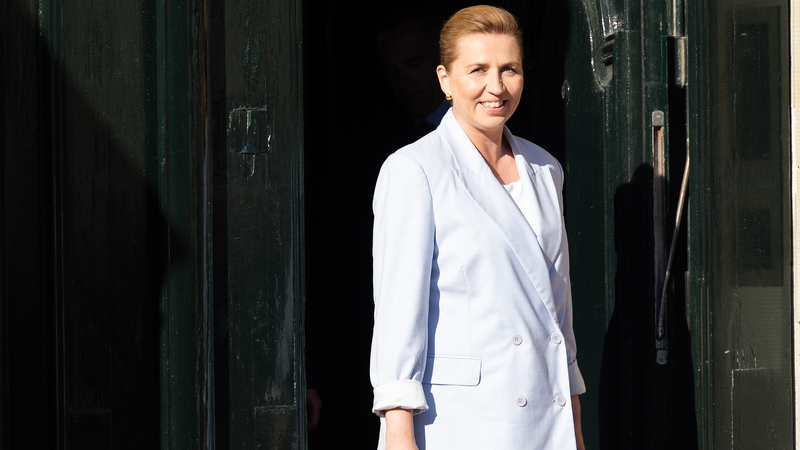
Denmark has finally emerged from the longest period of government formation in its history. On Monday, caretaker Prime Minister Mette Frederiksen announced that she has successfully established a new four-party government, concluding a grueling 69-day coalition-building process.
A Historic Coalition
Following a meeting with King Frederik X, Prime Minister Frederiksen confirmed that the new cabinet will be composed of the Social Democrats, the Socialist People's Party, the Social Liberal Party, and the Moderates. This multifaceted alliance aims to provide stability to the Danish administration after months of political uncertainty.
Frederiksen characterized the negotiations as "long and difficult," noting that while the process presented significant challenges, it was imperative that it ultimately succeeded for the sake of the country's governance.
Road to Resolution
The political deadlock began after the parliamentary elections on March 24. Although Frederiksen's Social Democrats maintained their position as the largest party, they suffered substantial losses. The results left the parliament fragmented, with neither the left-leaning nor the right-leaning blocs securing a clear majority.
The path to the current agreement was not linear. Frederiksen's initial attempt to form a broad coalition failed to reach a consensus. Simultaneously, center-right negotiations led by acting Defense Minister Troels Lund Poulsen also collapsed. It was not until May 23, when King Frederik X requested a renewed effort, that the current four-party arrangement began to take shape.
The new government is expected to present its comprehensive political program on Tuesday, outlining its priorities and legislative agenda for the coming term.
Reference(s):
cgtn.com