Escalation in the South
Tensions in the Middle East reached a critical peak this weekend as Israel significantly escalated its military operations in southern Lebanon. On Sunday, May 31, 2026, a series of devastating airstrikes left at least 14 people wounded, including hospital staff and a rescue worker, triggering widespread evacuations across the region.
One of the most severe strikes targeted an area adjacent to Hiram Hospital in the southern city of Tyre. According to Lebanon's Public Health Emergency Operations Center, 13 hospital staff members were injured, and the facility sustained extensive damage. Simultaneously, the Israeli military issued an urgent warning via social media, ordering all residents living south of the Zahrani River to evacuate immediately.
In a strategic move, the Israeli military announced it has taken control of Beaufort Castle, a key military position in southern Lebanon. This move aligns with a recent statement by Israeli Prime Minister Benjamin Netanyahu, who instructed his forces to deepen and expand their grip on areas held by Hezbollah.
Diplomatic Deadlock in Washington
The surge in violence comes on the heels of a failed diplomatic effort to stabilize the region. On May 29, delegations from Lebanon and Israel met in Washington, mediated by the United States, in hopes of securing a sustainable ceasefire. However, the talks ended without an agreement.
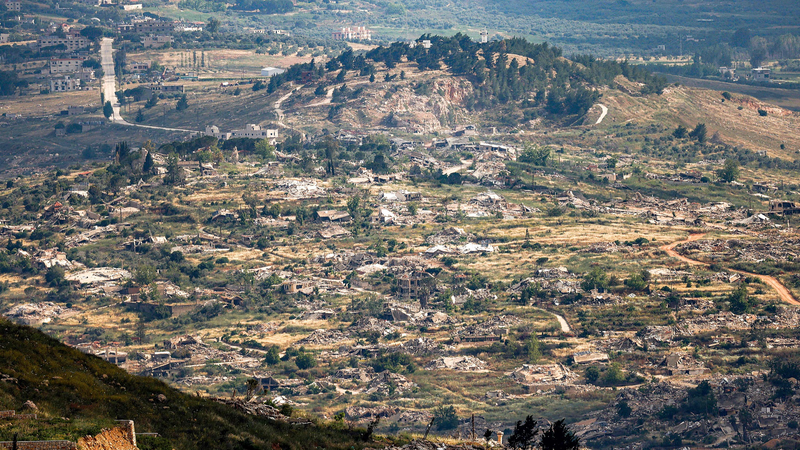
While Lebanon repeatedly called for a comprehensive ceasefire, Israel refused to withdraw from occupied Lebanese territories and maintained its demand for the total disarmament of Hezbollah. Lebanese Prime Minister Nawaf Salam characterized Israel's current approach as a "scorched-earth policy," asserting that Lebanon remains committed to diplomatic negotiations despite the aggression.
Strategic Analysis and Humanitarian Toll
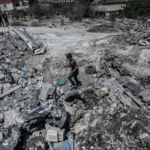
The humanitarian cost of the conflict has been staggering. Since March 2, the cumulative toll has reached 3,412 deaths and 10,269 wounded. Analysts suggest the current military strategy is driven by a desire for long-term security. Tian Wenlin, director of the Institute for Middle East Studies at Renmin University of China, noted that the "scorched-earth policy" is likely intended to create a depopulated buffer zone to reduce security threats along the border.
Global Condemnation
The international community has reacted with alarm. French President Emmanuel Macron stated there is no justification for the continued escalation, urging the United States and Iran to reach an agreement quickly. Germany's Foreign Minister Johann Wadephul expressed "great concern" over the Israeli army's advance, while the Egyptian Foreign Ministry condemned the "blatant aggression" as a violation of international law and the UN Charter.
As Lebanese Parliament Speaker Nabih Berri reiterates Hezbollah's commitment to a ceasefire, the region remains on edge, waiting to see if diplomatic channels can be reopened before further escalation occurs.
Reference(s):
14 wounded as Israel escalates military operation in southern Lebanon
cgtn.com