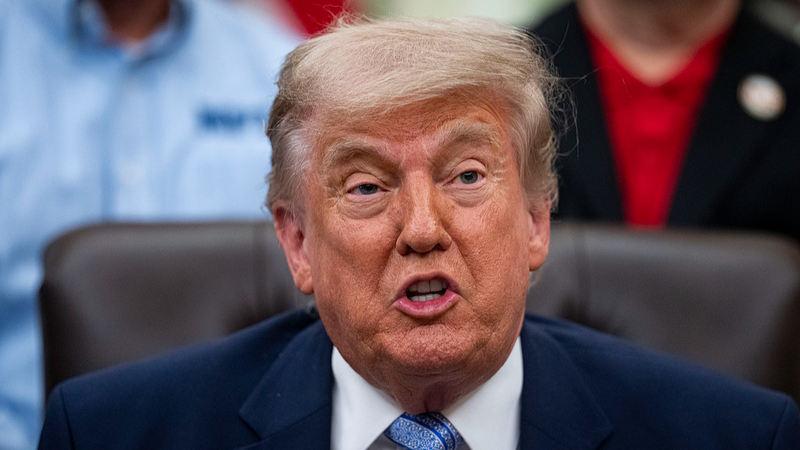
The diplomatic landscape in the Middle East has reached a critical juncture this May, as negotiations between the United States and Iran accelerate under a cloud of high-stakes tension. While both nations are reportedly seeking a path to end the ongoing conflict, US President Donald Trump is seriously considering fresh military strikes if a breakthrough is not achieved imminently.
On Friday morning, President Trump convened a high-level meeting with his national security team to evaluate available options. The session included Vice President JD Vance, Defense Secretary Pete Hegseth, CIA Director John Ratcliffe, and White House Chief of Staff Susie Wiles. Sources close to the discussions describe the current negotiation process as "agonizing," noting that while draft proposals are exchanged daily, substantive progress remains elusive.
Amidst this friction, Pakistan has emerged as a key mediator. Field Marshal Syed Asim Munir, Pakistan's Chief of Army Staff, arrived in Tehran on Friday to facilitate discussions between the two powers. While Iranian Foreign Ministry spokesperson Esmaeil Baghaei cautioned that the visit does not necessarily signal a "decisive stage," he confirmed that diplomatic engagement is ongoing.
According to Baghaei, the current talks are primarily focused on ending the war rather than resolving nuclear disputes. Iran's immediate priorities include a comprehensive ceasefire, the stabilization of the Strait of Hormuz, and a halt to US maritime operations. Baghaei maintained that Iran, as a member of the Nuclear Non-Proliferation Treaty, retains its right to use nuclear energy for peaceful purposes.
Reports suggest the potential peace agreement, which could be titled the "Islamabad Declaration," may consist of nine key clauses. These include:
- An immediate and unconditional comprehensive ceasefire.
- Guarantees against attacks on military, civilian, and economic infrastructure.
- An end to the media war between the two nations.
- Ensured freedom of navigation in the Gulf, the Strait of Hormuz, and the Gulf of Oman.
- The establishment of a joint monitoring and conflict resolution mechanism.
- The commencement of negotiations on outstanding issues within seven days.
- A gradual lifting of US sanctions contingent upon Iranian compliance.
- A mutual commitment to the UN Charter.
Despite a sense of "cautious optimism" from Pakistani sources, the path to peace remains fraught. Iran's enriched uranium program continues to be the primary sticking point hindering a final deal. This latest diplomatic push follows a volatile period that began with US and Israeli attacks on February 28, followed by 40 days of fighting that only ceased with a ceasefire on April 8. A previous attempt at peace talks in Islamabad on April 11-12 failed, leaving the current mediated proposals as the last viable alternative to renewed hostilities.
On a more stable note, US officials have clarified that there is currently no evidence of mining activity by Iran in the Strait of Hormuz, reporting that no explosive mines have been detected and no vessels have been damaged in the area.
Reference(s):
cgtn.com