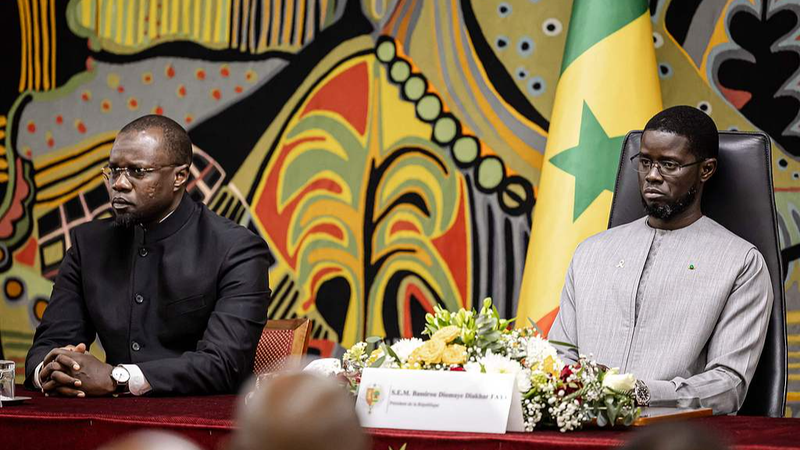
In a move that has sent shockwaves through West Africa, Senegalese President Bassirou Diomaye Faye dismissed Prime Minister Ousmane Sonko and dissolved the government this past Friday. The decision shatters a political partnership that propelled both men to power and introduces a period of significant uncertainty for one of the region's most prominent democracies.
A Fragile Alliance Collapses
The announcement, delivered via a decree read by presidential aide Oumar Samba Ba on state television, brings an abrupt end to months of mounting tension between the president and the charismatic populist leader. While both men rose to power under the banner of the Pastef party, promising radical reform and economic sovereignty, their alliance was inherently fragile.
The friction stemmed from a divide in authority: President Faye held the constitutional power of the office, while Prime Minister Sonko remained the movement's most influential political figure and the architect of its grassroots success. Recently, the rift became public, with President Faye criticizing the "excessive personalization" of the party around Sonko, while Sonko accused the president of a "failure of leadership."
Economic Crisis as a Catalyst
The political rupture occurs at a precarious moment for Senegal's economy. The nation is currently grappling with severe fiscal strain, with the International Monetary Fund (IMF) reporting that Senegal's debt burden has climbed to 132% of its gross domestic product. This financial instability led the IMF to freeze a $1.8 billion lending program after discrepancies in debt reporting emerged.
Internal disagreements over how to handle this crisis further strained the relationship between Faye and Sonko. Finance Minister Cheikh Diba recently warned parliament that fuel subsidy costs could exceed the 2026 budget allocation by nearly $2 billion. While President Faye leaned toward a more cautious approach with international financial institutions, Sonko reportedly rejected proposals to increase fuel prices and resisted debt restructuring pushed by the IMF.
Clashing Visions for the Future
Beyond economics, the two leaders held differing views on Senegal's relationship with global powers. Sonko pursued a more confrontational path, initiating audits of oil, gas, and mining contracts to reclaim control over natural resources, which included revoking 71 mining licenses and declaring a major gas agreement with BP unfair.
Adding to the tension, Sonko recently sparked controversy by condemning Western attempts to "impose" homosexuality on African societies, stating that African nations have "absolutely none" to learn from such Western practices. This cultural stance further diverged from the more diplomatic tone adopted by the presidency.
As of now, no replacement for the Prime Minister has been named. Despite his dismissal, Sonko appeared defiant, signaling to his supporters on social media that he remains steadfast, leaving the future of Senegal's political landscape in a state of flux.
Reference(s):
Senegal president sacks prime minister, dissolves government
cgtn.com