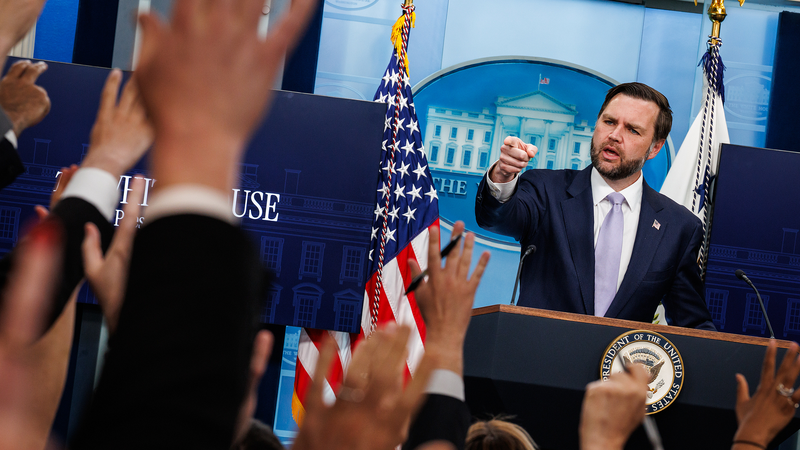
In a complex blend of diplomacy and pressure, the United States and Iran are navigating a precarious path toward a potential agreement. US Vice President JD Vance revealed this Tuesday that negotiations between the two nations have made "a lot of progress," stating that neither side desires a resumption of military campaigns.
Speaking during a White House briefing, Vance emphasized the importance of preventing Iran from rebuilding its nuclear weapons capability. He noted that Washington's primary goal in current negotiations is to ensure that Tehran cooperates on measures to avoid a regional nuclear arms race, which could see other Gulf nations seeking similar capabilities.
However, the diplomatic optimism is contrasted by the rhetoric of US President Trump. While the President suggested that the conflict could end "very quickly," he also issued a stern warning. Trump claimed that Iranian leaders were "begging" to make a deal, but cautioned that a new US military strike could occur in the coming days if an agreement is not reached. He further disclosed that he had nearly authorized an attack recently, postponing it only at the request of Gulf allies.
Tehran has responded with a stance of defiance. Kazem Gharibabadi, Iran's deputy foreign minister, stated via social media that the nation remains united and resolute. "For us, surrender has no meaning; either we achieve victory or become martyrs," Gharibabadi asserted, signaling Iran's readiness to confront any military aggression.
Economic Pressure and the "Economic Fury" Campaign
Simultaneously, the US is intensifying its economic warfare. The Department of the Treasury's Office of Foreign Assets Control (OFAC) has designated and blocked a prominent Iranian foreign currency exchange house along with several front companies. These entities are accused of managing hundreds of millions of dollars for sanctioned Iranian banks.
This action is part of the broader "Economic Fury" campaign, which has targeted over 50 individuals, companies, and vessels believed to be generating revenue for the Iranian government.
Naval Confrontation in the Indian Ocean
Adding to the tension, the Trump administration has seized an Iran-linked oil tanker, the Skywave, in the Indian Ocean. This marks the third such seizure of a vessel tied to Iranian oil shipments. Reports indicate the vessel was likely carrying over 1 million barrels of crude oil loaded from Iran's Kharg Island in February. After transiting the Malacca Strait and sailing west of Malaysia, the tanker was intercepted while heading back toward the Middle East.
Reference(s):
cgtn.com