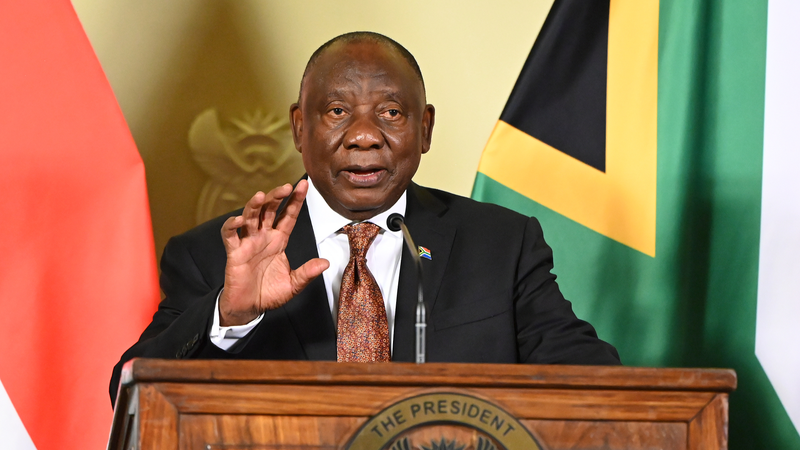
In a strong effort to restore order and national unity, South African President Cyril Ramaphosa has condemned recent outbreaks of anti-immigrant violence across the country. In an open letter released by his office, the President asserted that "opportunists" are exploiting social grievances and community frustrations to incite attacks against foreign nationals.
President Ramaphosa emphasized that xenophobia and violence have no place in the nation, clarifying that the recent protests and criminal acts do not reflect the views of the majority of South Africans or the official policies of the government. He specifically highlighted illegal activities, such as unauthorized property searches and the forced demand for identification documents, as unlawful actions being carried out under the guise of community concerns.
The domestic unrest has sparked significant diplomatic tension across the African continent. Nigeria recently announced plans to repatriate at least 130 of its citizens following fears of escalating violence, while also calling for investigations into the deaths of two Nigerian nationals. Similarly, Ghana has expressed grave concern and summoned South Africa's ambassador to address the reported xenophobic acts.
Addressing the root causes of the friction, President Ramaphosa acknowledged the strain that undocumented migration places on essential public services, including healthcare, housing, and municipal infrastructure, particularly within impoverished communities. He reiterated that the government will address illegal immigration strictly within the bounds of the law.
To combat these challenges, the President revealed that the South African Border Management Authority intercepted approximately 450,000 people attempting illegal entry during the past financial year. Moving forward, the administration plans to increase workplace inspections to penalize employers who hire undocumented workers and renew efforts to eliminate corruption within the immigration system.
This current wave of unrest is part of a troubling pattern; South Africa has faced recurring outbreaks of anti-immigrant violence over the past two decades, often coinciding with periods of severe economic hardship and high unemployment rates.
Reference(s):
cgtn.com