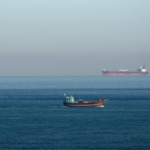
Tensions in one of the world's most critical maritime corridors reached a boiling point this week as the United States and Iran exchanged competing claims over naval clashes near the Strait of Hormuz. Despite the military friction, reports have emerged that both nations are discussing a temporary framework to halt hostilities and reopen the strategic waterway to commercial traffic.
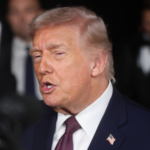
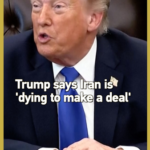
US President Donald Trump stated that three US destroyers transiting the strait suffered no damage during the encounters. The US President issued a stern warning to Tehran, urging them to finalize a deal quickly. Conversely, Tehran has accused the US of violating a ceasefire by attacking two Iranian vessels near the Strait of Hormuz and conducting airstrikes on civilian areas within Qeshm Island and Hormozgan province.
Iranian military spokesman Ebrahim Zolfaghari claimed that Iranian forces retaliated by targeting US military vessels south of Chabahar port and east of the strait, asserting that significant damage was inflicted on the US assets. Further reports from Iranian media indicated explosions in Tehran and several southern cities late Thursday, while the semi-official Mehr news agency reported a US and Israeli attack on a naval base in Minab County in Hormozgan province early Friday. Local officials stated there were no casualties resulting from the base attack.
Amidst this volatility, diplomatic channels remain open. According to senior Iranian officials, Washington and Tehran are considering a one-page interim agreement designed to pause fighting for 30 days. This temporary truce would provide a critical window for negotiations on a broader, long-term settlement.
Under the proposed framework, the United States would lift its blockade on Iranian ports and ships, while Iran would commit to reopening the Strait of Hormuz for commercial traffic. Such an arrangement is seen as a necessary first step to address more contentious issues, including sanctions relief, the release of frozen Iranian assets, and the future of Iran's nuclear program.
However, significant hurdles remain regarding nuclear proliferation. US negotiators are reportedly demanding that Iran hand over highly enriched uranium, close several nuclear facilities, and suspend enrichment activities for 20 years. Tehran has countered with a proposal to transfer a portion of its stockpile to a third country—possibly Russia—and has suggested a shorter suspension period of 10 to 15 years.
Reference(s):
US, Iran exchange claims over naval attacks amid push for deal
cgtn.com