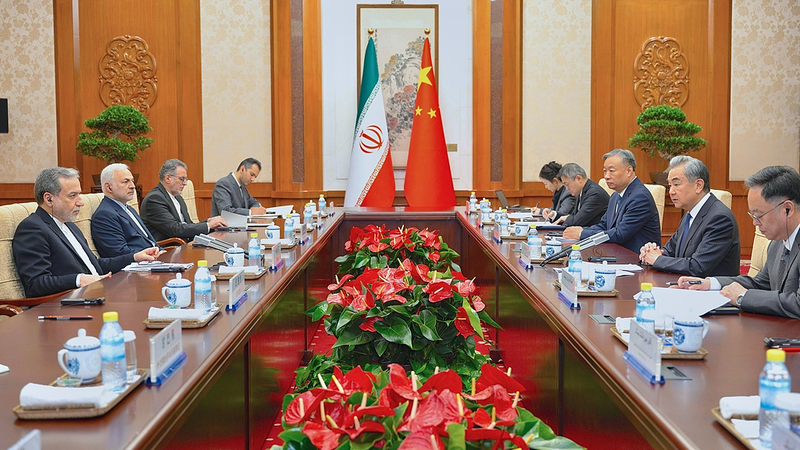
In a significant move toward regional stability, Iranian Foreign Minister Seyed Abbas Araghchi conducted his first visit to China this week since the onset of US-Israel joint strikes on Iran on February 28. The visit, occurring at a critical juncture between escalating conflict and the potential for peace, underscores a growing momentum for diplomatic solutions in the Middle East.
A Shift Toward Dialogue
Following a high-level meeting with Chinese Foreign Minister Wang Yi, Minister Araghchi emphasized that political crises cannot be resolved through military force. Speaking with the Iranian news agency IRIB, Araghchi noted that China recognizes a transformed Iran—one that has attained an elevated international standing and proven its capabilities and strength.
Central to the discussions was the strategic Strait of Hormuz. Araghchi affirmed Iran's commitment to safeguarding its sovereignty and national dignity while pursuing lasting solutions through dialogue. He specifically highlighted that the reopening of the Strait could be addressed promptly, expressing appreciation for China's constructive role in preventing further escalation in the region.
China's Role as a Mediator
Foreign Minister Wang Yi stressed that Beijing has been actively promoting peace and encouraging dialogue since hostilities began. He urged all relevant parties to respond to international calls to restore safe and normal navigation through the Strait of Hormuz as a priority.
Experts suggest the timing of this visit is pivotal. Professor Wang Jin, director of the Center for Strategic Studies at Northwest University in China, noted that Araghchi's remarks demonstrate a clear willingness to ease tensions. Similarly, Middle East expert Zou Zhiqiang from Fudan University observed that since the temporary ceasefire agreement reached on April 8, neither Iran nor the US has shown a desire to resume large-scale military conflict, aligning with broader international aspirations for peace.
Addressing the Nuclear Question
A key pillar of the discussions involved the nuclear issue. Minister Wang affirmed China's support for Iran's legitimate right to peaceful nuclear energy while appreciating Iran's commitment not to pursue nuclear weapons. This stance is seen as a strategic effort by Beijing to steer the nuclear issue back toward the track of negotiation and dialogue, encouraging Iran to remain steadfast in its peaceful commitments despite internal pressures following the outbreak of conflict.
Building a New Regional Framework
Beyond immediate crises, the two nations discussed a regional framework that balances development and security. Professor Zou explained that the traditional security order—often characterized by external military interventions and bloc confrontations—is no longer sustainable. Instead, a framework led by regional countries, focusing on shared participation and common interests, is viewed as the only way to address the root causes of instability.
This vision aligns with a four-point proposal introduced by China in April, which calls for peaceful coexistence, respect for national sovereignty, adherence to the international rule of law, and a balanced approach to security. To support these goals, China has engaged in extensive "shuttle diplomacy," including approximately 30 phone calls between Minister Wang and senior officials from Iran, Russia, Israel, and Gulf countries, as well as a recent exchange with US Secretary of State Marco Rubio.
As the international community watches closely, China's proactive mediation positions it as a key constructive force in easing regional tensions and fostering a sustainable peace in the Middle East.
Reference(s):
Araghchi's China visit signals peace, opens room for diplomacy
cgtn.com