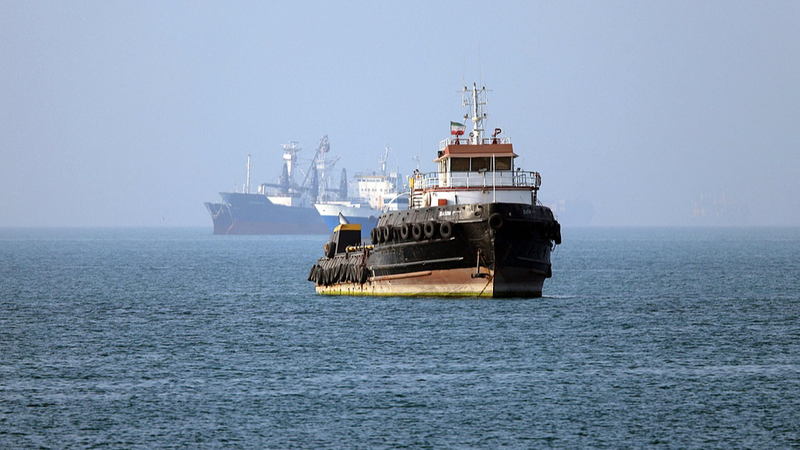
On Monday, the United States escalated its presence in the Gulf by launching a high‑stakes military operation dubbed "Project Freedom," aiming to break Iran’s stranglehold on the Strait of Hormuz. The move came just days after Tehran effectively shut down the strategic waterway, prompting a wave of retaliatory strikes that also targeted the United Arab Emirates (UAE).
A Bold Attempt to Secure a Vital Lifeline
Before the latest conflict, roughly one‑fifth of the world’s oil and liquefied natural gas shipments transited the narrow strait, making its closure a potential shock to global energy markets. Admiral Brad Cooper, head of U.S. Central Command, said American helicopters—including Apache and MH‑60 Seahawk aircraft—engaged and destroyed six Iranian small boats while intercepting cruise missiles and drones fired by Tehran. "We’re providing multiple layers of protection for commercial shipping, rather than direct naval escorts," Cooper explained, emphasizing a defensive network of ships, aircraft, and airborne early‑warning systems.
The operation was launched after Iran’s February 28 offensive against the U.S. and Israel, which forced the closure of the strait. Although the U.S. military reported that two American‑flagged commercial vessels successfully passed through, the Islamic Revolutionary Guard Corps (IRGC) denied any such passage, stating that no ships had crossed in recent hours.
Regional Spillover: The UAE Under Fire
As the confrontation intensified, the UAE became the first casualty of renewed hostilities since a temporary ceasefire on April 8. Emirati air defense systems intercepted 12 ballistic missiles, three cruise missiles, and four drones launched from Iran. A fire broke out at the Fujairah Oil Industrial Zone following an Iranian strike, injuring three workers. The UAE Foreign Ministry condemned the attacks as a "dangerous escalation" and an "unacceptable act of aggression," asserting the nation’s "full and legitimate right" to respond.
Iranian state media, citing a senior military source, said Tehran had no pre‑planned intention to strike UAE oil facilities, blaming "U.S. military adventurism" for creating "a passage for ships to illegally pass through the forbidden passages of the Strait of Hormuz." An informed source later warned that any "unwise" action by the UAE could render all its interests legitimate targets.
Conflicting Accounts at Sea
While U.S. Central Command reported that a guided‑missile destroyer safely transited the strait and that no American ships were hit, Iranian forces claimed they fired warning shots—including cruise missiles, rockets, and drones—after a U.S. vessel ignored initial alerts. The clash underscored the fog of war in a region where every movement is closely watched and can trigger a broader conflict.
Global Energy at a Crossroads
The Strait of Hormuz remains the world’s most critical oil chokepoint. With ships from at least 87 countries now stranded in the Gulf, the stakes for global energy security could not be higher. The U.S. military has urged commercial vessels to resume transit despite Iranian threats, but many operators remain cautious, weighing the risk of becoming collateral damage in an increasingly volatile standoff.
Analysts warn that the current strategy—relying heavily on military force to push ships through—carries significant risks. "The U.S. lacks a clear operational pathway to safely reopen the strait," noted Wang Jin, director of the Center for Strategic Studies at Northwest University. "A renewed large‑scale conflict could ensue, and commercial vessels may find themselves caught in the crossfire."
Looking Ahead
As the situation continues to evolve, the world watches closely. The success of "Project Freedom" will hinge not only on the ability of the U.S. and its allies to protect shipping lanes, but also on whether diplomatic channels can be reopened to de‑escalate tensions before the confrontation spirals into a broader regional war. For now, the Gulf remains a flashpoint where every missile launched and every ship moved could alter the course of global energy supplies and geopolitical stability.
Reference(s):
US moves to reopen Strait of Hormuz by force, as Iran attacks UAE
cgtn.com