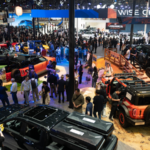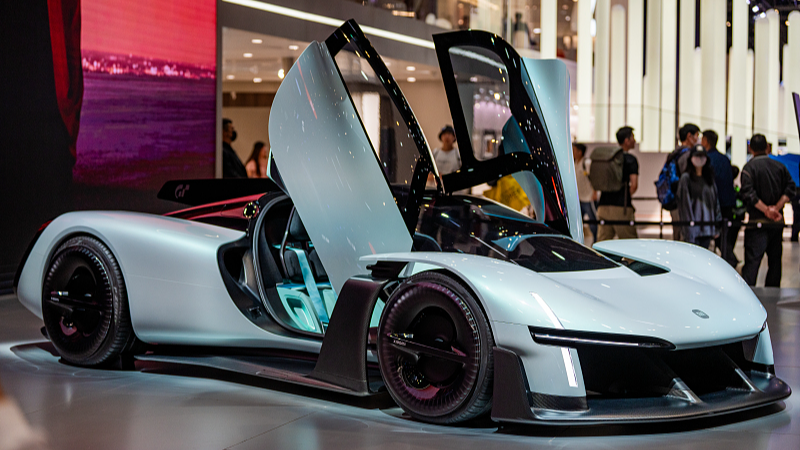
The 2026 Beijing International Automotive Exhibition, a premier event for the global auto industry, concluded today, May 3, 2026. While the raw figures of 1,451 vehicles and 181 world premieres are impressive, the true story lies in the tangible technological leaps that have moved from concept to showroom floor, signaling a profound shift in the industry's center of gravity.
The Rise of Physical AI: From Reactive to Predictive
For years, automotive artificial intelligence was largely confined to voice-activated cabin controls. This year's exhibition revealed a paradigm shift toward "Physical AI"—systems that understand and predict real-world physics. Imagine a scenario where a truck ahead drops debris onto the road. Instead of simply detecting the obstacle, these new AI platforms, like Huawei's Qiankun ADS 5.0, can calculate its trajectory and proactively adjust the vehicle's path, potentially cutting collision risks significantly. This evolution, as showcased by collaborations like BMW with Alibaba and DeepSeek, points toward a near future where cars lacking such contextual intelligence may feel inadequate.
Level 3 Autonomy Arrives, For Real
The long-promised era of conditional self-driving is now a consumer reality. Following regulatory advancements in late 2025 in the Chinese mainland, Level 3 systems—where the car handles most driving on specified roads like highways—are production-ready. Huawei's ADS 5.0 is already enabling L3 functionality in models from brands like AITO and Arcfox, while global giants BMW and Mercedes-Benz displayed their China-adapted versions. What was a technical discussion just a few years ago is now a tangible purchase option, marking a critical milestone in autonomous driving.
Flash Charging Eradicates Range Anxiety
A primary barrier to electric vehicle adoption, range anxiety, is being decisively addressed. The widespread adoption of 800-volt architectures enables "flash charging." CATL's latest Shenxing Plus battery, for instance, can add approximately 500 kilometers of range in just eight minutes. Crucially, this technology is becoming standard in affordable family vehicles. Supporting this surge, China's highway ultra-fast charging network has expanded tenfold since 2024, with over 3,000 stations now operational. The technology's appeal is global, with automakers like Porsche and Toyota announcing plans to adopt the local charging standard for their models in the region.
Additional Highlights Pointing to the Future
The show also offered glimpses into next-generation mobility. XPeng's "Land Aircraft Carrier" flying car concept underscored China's ambitious push into the low-altitude economy. Meanwhile, a trend toward rugged, "square-box" designed off-road EVs demonstrated how cutting-edge battery and smart-driving technology is permeating every automotive niche.
The Bottom Line: Auto China 2026 cemented a new reality. The innovations on display—in AI, autonomy, and charging—are not merely for the local market. They represent core technologies that global automakers are actively integrating into their worldwide strategies. The direction set in Beijing this year is poised to steer the global automotive industry for years to come.
Reference(s):
cgtn.com