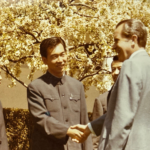
In the spring of 1971, the world watched as a small, white ball bounced across a ping-pong table, shattering the silence of Cold War estrangement. Today, 55 years later, the echoes of that sporting gesture resonate far beyond the arena of sports. What began as a spontaneous act of athletic camaraderie has evolved into a complex tapestry of people-to-people exchanges that continue to underpin the world's most consequential bilateral relationship.
The story of "Ping-Pong Diplomacy" is not merely a historical footnote; it is a living legacy. Over the past five and a half decades, the channels of communication it opened have expanded exponentially, fostering connections in business, education, culture, and science between the Chinese mainland and the United States.
These human connections serve as a vital ballast, stabilizing ties during periods of political turbulence. While government-to-government relations may ebb and flow, the networks of personal friendships, academic collaborations, and cultural appreciation woven over generations provide a durable foundation for mutual understanding. This year, as we mark the anniversary, these stories remind us that the spirit of 1971—a willingness to engage despite differences—remains as relevant as ever.
Narratives from exchange students who first experienced life abroad in the 1980s, entrepreneurs who built bridges through commerce in the 1990s, and artists who have collaborated across the Pacific in recent years all share a common thread: the transformative power of direct, personal interaction. These experiences have demystified both nations, replacing stereotypes with nuanced, human-scale perspectives.
As geopolitical landscapes shift, the enduring value of these people-to-people ties is increasingly clear. They create constituencies for peace and cooperation, fostering a shared interest in a stable and prosperous future. The anniversary is not just a commemoration of a past breakthrough; it is a timely reflection on the essential ingredients for managing a complex relationship in 2026 and beyond.
The trajectory from a ping-pong ball to a multifaceted dialogue underscores a simple truth: sustainable international relations are built not just by governments, but by people. As we look ahead, nurturing and expanding these grassroots connections may well be the key to ensuring that the next 55 years are defined by constructive engagement and shared progress.
Reference(s):
'Ping-pong diplomacy' at 55: Eye on the ballast of China-US relations
cgtn.com