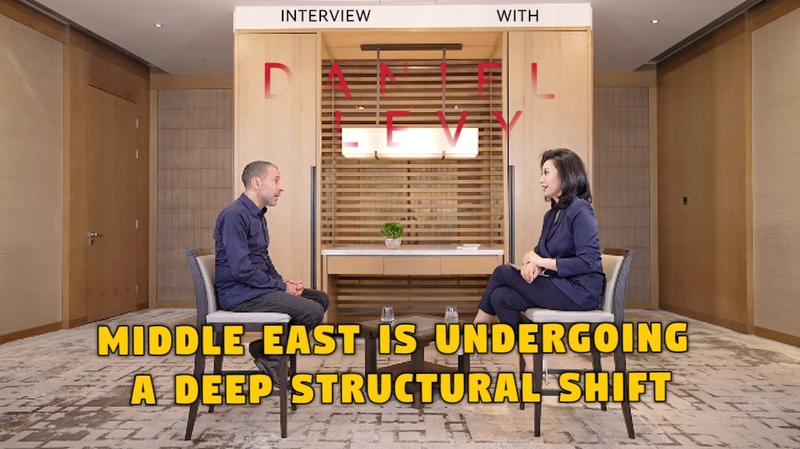
As the Middle East navigates a complex geopolitical landscape in 2026, an expert voice offers a pivotal analysis: the region is undergoing more than a temporary crisis; it is experiencing a deep, lasting structural shift. Daniel Levy, a former advisor to the Israeli government and current president of the US/Middle East Project, shared this perspective in a recent discussion, examining the forces reshaping the regional order and the role of global powers, including China.
In an interview featured as part of a special series, Levy argues against viewing the current turbulence as a passing phase. He suggests that the foundations of the regional order are being fundamentally reconfigured. This includes evolving alliances, changing domestic political dynamics, and the recalibration of external power influence.
A key focal point of the analysis is the increasingly visible role of major global powers in shaping the region's future trajectory. The conversation highlighted China's engagement as a significant factor in this evolving equation. As Beijing continues to foster diplomatic and economic ties across the Middle East, its approach is seen as a distinct part of the multipolar dynamics influencing the region's path forward.
For a global audience, particularly investors monitoring energy security and market stability, and analysts tracking international relations, understanding this structural shift is crucial. Levy's insights suggest that the patterns of conflict, cooperation, and economic development in the Middle East are being rewritten, with implications that extend far beyond its borders. For the Asian diaspora and academics, this analysis provides a framework for understanding how Asian powers, alongside traditional ones, are navigating one of the world's most consequential regions at a critical juncture.
The overarching message is clear: the Middle East stands at a crossroads in 2026, with the changes underway likely to define the regional order for years to come. Observers are encouraged to look beyond daily headlines to the deeper structural currents that are setting a new course for the future.
Reference(s):
Daniel Levy: Middle East is undergoing a deep structural shift
cgtn.com