The global industrial chain is undergoing a historic restructuring. In a world characterized by geopolitical tensions, volatile energy costs, and fragmented supply chains, manufacturing worldwide faces unprecedented uncertainty. In stark contrast, the Chinese mainland has demonstrated remarkable resilience, anchored by its comprehensive industrial ecosystem and continuous technological advancement. As we move through 2026, this evolution is redefining China's role on the global stage.
The Evolution of Chinese Manufacturing
The international community's perception of Chinese manufacturing has shifted significantly in recent years. A consensus has emerged that the nation is actively climbing the global value chain, moving beyond its historical role as a low-cost producer of consumer goods. For decades, its manufacturing was defined by assembling products designed elsewhere, with limited control over core technologies and industrial standards.
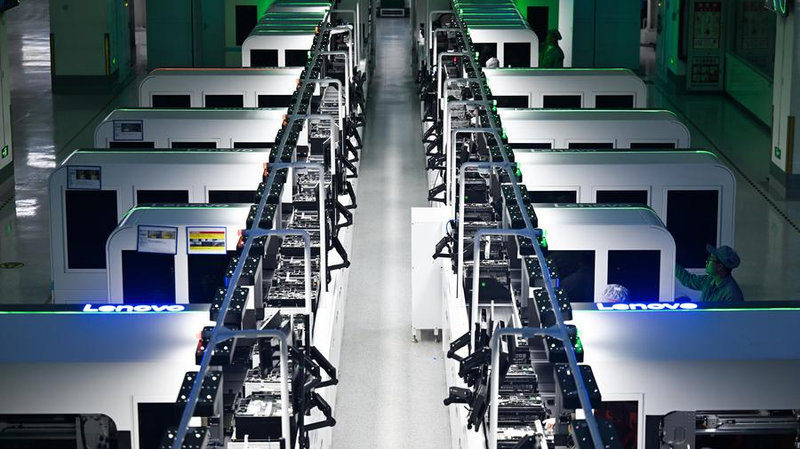
This paradigm has fundamentally transformed. As reported by international media, China is no longer merely a manufacturing base. It has emerged as a pivotal exporter of core technologies, including artificial intelligence (AI), industrial robots, and high-end chips. The essence of this change is a shift from exporting finished goods to producing the advanced manufacturing equipment, complete industrial systems, and standards that empower global production—becoming what analysts now term a "factory of factories."
Industrial Advantages and Financial Empowerment
This transformative upgrade is rooted in unparalleled industrial strengths. As the world's only economy with all industrial categories in the United Nations classification system, the Chinese mainland has maintained the world's largest manufacturing scale for well over 15 consecutive years, accounting for nearly a third of global manufacturing value-added. This fully developed ecosystem provides exceptional resilience. While factories elsewhere might halt production amid supply chain shocks, Chinese manufacturers often maintain stable operations, ensuring domestic industrial stability while absorbing transferred global orders.
The new model extends beyond simple commodity trade. It involves the integrated export of technology, equipment, industrial chains, and services. Leading enterprises in sectors like new energy and intelligent manufacturing are building overseas industrial parks, creating ecosystems that help host countries develop local manufacturing capabilities from the ground up. This represents a shift from product sales to empowering cooperation.
Optimized financial services provide crucial support for this robust growth. Driven by infrastructure connectivity initiatives, China's logistics and cross-border financial networks have developed in coordination. The Cross-border Interbank Payment System (CIPS), for instance, has seen robust growth, processing significant transaction volumes daily. This system provides an efficient, secure, and low-cost channel for cross-border trade and investment, forming a hidden competitive edge by mitigating geopolitical and exchange rate risks.
In today's global economy, where development certainty and supply chain security are paramount, China's stable economic environment, complete industrial system, and reliable delivery capacity generate unique "security dividends." It provides comprehensive support—from research and development and component supply to integrated industrial solutions—for global industrial development, cementing its role as a foundational pillar of the world's manufacturing infrastructure in 2026.
Reference(s):
cgtn.com