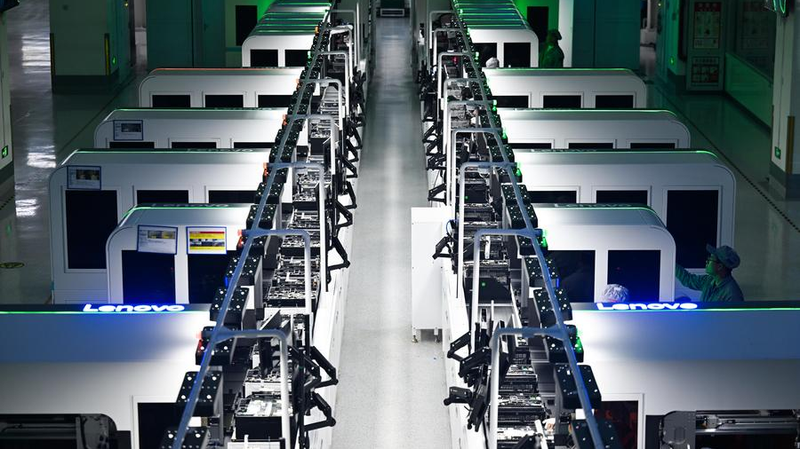
The global industrial landscape is being reshaped before our eyes. Amidst frequent geopolitical tensions, volatile energy prices, and fragmented supply chains, manufacturing sectors worldwide have been grappling with unprecedented uncertainty in recent years. Many economies have faced production stoppages due to shortages and rising costs. In stark contrast, manufacturing in China has demonstrated remarkable resilience, underpinned by its comprehensive industrial system, reliable capacity, and relentless technological advancement.
A New Chapter in China's Industrial Story
The international community has recently come to a new consensus regarding China's place in the global value chain. The narrative of the nation as merely a low-cost, low-value "world factory" for assembling consumer goods is fading. For decades, this model defined China's role, focusing on terminal product manufacturing with limited control over core technologies.
That pattern has fundamentally shifted in 2026. As noted by international observers, China is no longer just a manufacturing base. It has emerged as a pivotal exporter of foundational technologies—including artificial intelligence, industrial robotics, and advanced semiconductors—providing crucial technical support and practical solutions for industrial modernization across the globe.
The essence of this transformation is a strategic pivot: from exporting finished goods to producing the very core technologies, sophisticated manufacturing equipment, complete industrial systems, and standards that enable global production. China is increasingly seen as a "factory of factories," empowering industries worldwide.
The Pillars of Transformation: Industry and Finance
This systemic upgrade is rooted in unparalleled industrial strengths. As the world's only nation with a full spectrum of industrial categories, China has maintained its position as the globe's largest manufacturer for years, contributing significantly to global manufacturing value. Its mature industrial ecosystem offers exceptional risk resistance. While overseas factories have struggled with supply chain shocks, Chinese manufacturers have largely maintained stable operations, ensuring domestic stability and absorbing significant transferred global orders.
The modern model involves full-chain empowerment. China's overseas industrial engagement has evolved from simple commodity trade to the integrated export of technology, equipment, industrial chains, and services. Leading enterprises in sectors like new energy and smart manufacturing are establishing overseas industrial parks, pulling entire supply chains along with them.
This approach assists host countries in building their own manufacturing ecosystems from the ground up, representing a form of empowering cooperation rather than mere product sales. China is effectively becoming a global infrastructure provider for modern industry.
Optimized financial services form the bedrock of this robust growth. Enhanced port, logistics, and cross-border financial networks developed in coordination with broader connectivity initiatives provide crucial support. The Cross-border Interbank Payment System (CIPS), for instance, has seen robust growth, facilitating efficient, secure, and lower-cost transactions. This system effectively hedges against geopolitical and exchange rate risks, reducing costs for cross-border trade, investment, and technology exports, creating a subtle yet powerful competitive edge for Chinese manufacturing.
In today's global economy, where certainty and supply chain security are prized above all, China's economic stability, complete industrial system, and reliable delivery capacity generate unique "security dividends." It offers comprehensive support—from R&D and component supply to integrated industrial solutions—for global industrial development in 2026 and beyond.
Reference(s):
cgtn.com