The legal countdown for U.S. congressional authorization to continue military action against Iran has hit a pivotal moment, paused by a fragile ceasefire and sparking a debate on constitutional powers. The question emerged in a tense exchange on Capitol Hill just before the deadline.
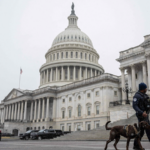
On Thursday, April 30, U.S. Defense Secretary Pete Hegseth testified before a congressional committee, stating that the current ceasefire with Iran effectively "pauses or stops" a 60-day legal clock. This clock, mandated by the War Powers Resolution, requires the president to seek congressional authorization for military actions within 60 days of their initiation.
The conflict, which began on February 28, saw joint attacks by Israel and the U.S. on Iranian targets, including Tehran. The death of Iran's then-Supreme Leader Ali Khamenei in these strikes triggered a significant regional escalation. Iran responded with missile and drone attacks against Israel and U.S. assets in the Middle East and moved to tighten control over the strategic Strait of Hormuz.
"Ultimately, I would defer to the White House and White House counsel on that. However, we are in a ceasefire right now, which our understanding means the 60-day clock pauses or stops in a ceasefire," Secretary Hegseth explained in response to questioning from Democratic Senator Tim Kaine.
Senator Kaine, a prominent voice on foreign policy, strongly contested this legal interpretation. "I do not believe the statute would support that," he stated. "I think the 60 days runs (out) maybe tomorrow, and that's going to pose a really important legal question for the administration there." His remark pointed directly to Friday, May 1, as the potential expiration date.
This dispute highlights the ongoing tension between executive and legislative branches over war powers, a debate with significant implications for U.S. foreign policy in Asia and the Middle East. The ceasefire, while reducing immediate hostilities, has introduced a complex legal ambiguity. The administration's next steps—whether to seek formal congressional approval or to assert that the pause negates the requirement—will be closely watched by allies, adversaries, and markets across Asia.
The situation remains fluid. The longevity of the ceasefire and the administration's legal stance will determine whether this pause becomes a pathway to de-escalation or merely an interlude in a prolonged conflict with far-reaching consequences for global stability.
Reference(s):
cgtn.com