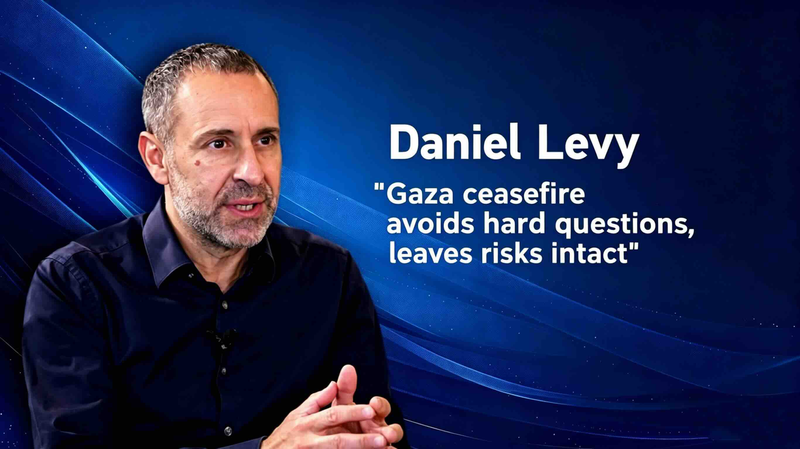
In a recent analysis, Middle East expert Daniel Levy has voiced significant concerns regarding the current ceasefire in Gaza, arguing that while the halt in hostilities is welcome, it fails to confront the underlying issues that perpetuate conflict. Levy, president of the US/Middle East Project and a former advisor to the Israeli government, suggests that the pause in fighting is fragile and exists under intensifying political pressure, a dynamic also observable in tensions along the Lebanon-Israel border.
This situation, Levy contends, raises profound questions about the feasibility of achieving a lasting and just peace in the region. The avoidance of "hard questions" during ceasefire negotiations often means that core disputes over land, sovereignty, and security remain unresolved, setting the stage for future cycles of violence. For a global audience keenly observing Asia's connections to wider geopolitical stability, the lessons from the Middle East are stark: temporary truces without comprehensive political solutions are inherently unstable.
The analysis underscores a critical juncture for international diplomacy. As political pressures mount, the space for meaningful dialogue can shrink, making the implementation of a durable peace agreement increasingly difficult. This has implications not only for the people directly affected but also for global markets and security architectures in which Asia plays a central role. Investors and policymakers monitoring regional stability will find the expert's warnings a crucial consideration for 2026's geopolitical risk assessments.
The broader message is clear: sustainable peace requires moving beyond short-term ceasefires to address the root causes of conflict. As the world watches, the coming months will test whether current diplomatic efforts can evolve to meet this formidable challenge.
Reference(s):
Daniel Levy: Gaza ceasefire avoids hard questions, leaves risks intact
cgtn.com