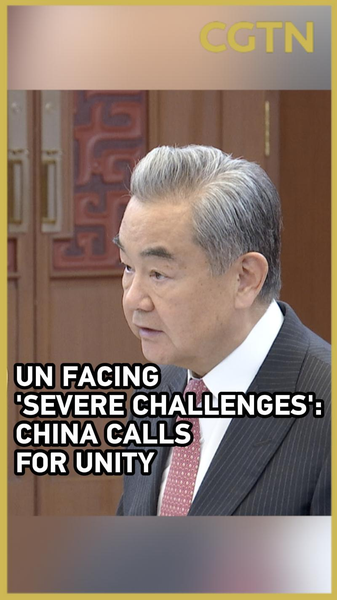
In a high-level diplomatic engagement in Beijing this April, Chinese Foreign Minister Wang Yi met with United Nations General Assembly President Annalena Baerbock, underscoring the critical juncture at which global governance finds itself in 2026.
Minister Wang Yi articulated a firm stance, stating that the United Nations is confronting "severe challenges" and that the current moment demands a reinvigorated and strengthened multilateral body. "Amid rising turmoil and power politics," he emphasized, "member states should uphold sovereign equality, defend international law, and strengthen dialogue to safeguard fairness and justice."
Echoing the urgency, UNGA President Baerbock acknowledged China's "long-standing and firm support" for the UN and its work. She pointed to the increasing pressure on multilateralism and direct attacks on the UN Charter, asserting that "countries need to unite more than ever to support the UN."
This dialogue comes at a time when geopolitical tensions and complex global issues test the resilience of international institutions. For Asia, a region deeply integrated into the world economy and politics, the health of the UN system is paramount. The call for unity and adherence to foundational principles resonates with business leaders seeking stable frameworks for investment, academics analyzing governance models, and diaspora communities watching developments from afar.
The meeting between Wang Yi and Baerbock serves as a reminder that in an interconnected world, collaborative diplomacy remains indispensable. As 2026 unfolds, the international community's ability to heed such calls for solidarity will significantly shape the trajectory of peace and development.
Reference(s):
cgtn.com