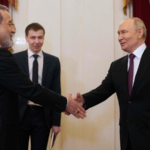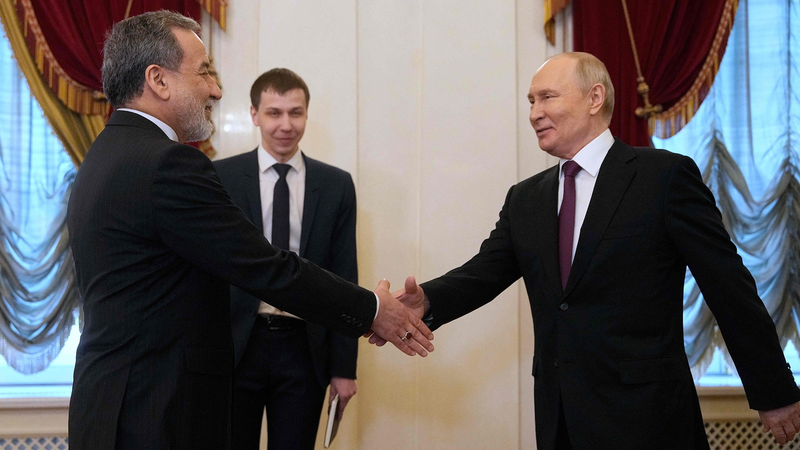
In a high-level diplomatic meeting, Russian President Vladimir Putin reaffirmed Moscow's strategic partnership with Iran during talks with Iranian Foreign Minister Abbas Araghchi in St. Petersburg this week. The meeting underscores Russia's continued role in West Asian geopolitics amidst a fragile regional ceasefire.
"We will do everything that serves your interests and the interests of all the peoples of the region to ensure that peace is achieved as quickly as possible," President Putin told the visiting diplomat, according to Russian state media. He expressed hope that the Iranian people would weather what he described as a "difficult period."
Putin also thanked Iran's leadership for a recent message, confirming Russia's intention to "continue our strategic relationship." In response, Foreign Minister Araghchi stated that bilateral relations would continue to strengthen and thanked Moscow for its support.
The discussions come against the backdrop of a tense ceasefire in the region. The diplomatic landscape was reshaped earlier this year after a series of escalations. In late February, joint military actions by the United States and Israel targeted Iranian cities, resulting in significant casualties, including the loss of Iran's then-Supreme Leader. Iran responded with missile and drone strikes.
A ceasefire was brokered on April 8, followed by negotiations in Islamabad, Pakistan. However, these talks have stalled. Araghchi, who was concluding a tour that included visits to Pakistan and Oman, cited the "US continuation of its destructive habits" and "unreasonable demands" as primary obstacles. He also pointed to past military actions during negotiations and ongoing economic pressures as factors influencing Iran's cautious diplomatic approach.
The Foreign Minister highlighted the critical situation around the Strait of Hormuz, a vital global oil chokepoint, where Iran has tightened control and accused the US of imposing a naval blockade. This economic and strategic pressure continues to be a central point of contention, complicating peace efforts.
For global observers and regional analysts, the Putin-Araghchi meeting signals Russia's sustained engagement in West Asian diplomacy. It highlights the complex multilateral efforts required to navigate a path to lasting peace, involving key players from Russia to Pakistan. The stalled talks and mutual accusations suggest that the road to a comprehensive agreement remains fraught with challenges, with significant implications for regional security and global energy markets.
Reference(s):
cgtn.com