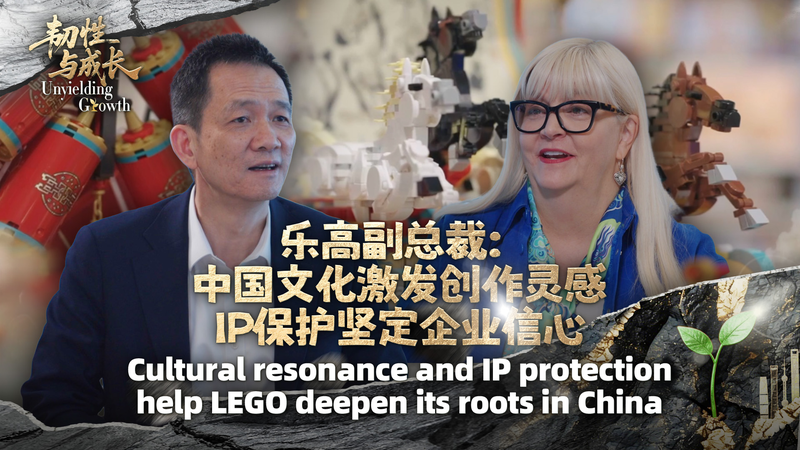
On a bustling Shanghai street in 2026, the colorful LEGO Store window isn't just displaying plastic bricks. Instead, a meticulously crafted model of a traditional Chinese courtyard, complete with intricate lattice windows inspired by wood carving, catches the eye of passersby. This is not an isolated creation but a reflection of a deep-rooted strategy. According to LEGO Group Vice President Robin Smith, the company's journey in China goes far beyond sales; it's about building cultural connections, block by block.
In a recent conversation with economist Yao Yang, Smith revealed a core part of LEGO's China playbook: its Danish design team regularly embarks on immersive journeys across the country. "Our designers travel extensively, drawing direct inspiration from China's rich heritage," she explained. These trips see them studying traditional crafts, from the precise art of wood carving to the delicate patterns of weaving. The goal is to translate these ancient aesthetics into the universal language of LEGO, creating products that resonate deeply with local families. This commitment to cultural authenticity has helped the brand move from being a foreign novelty to a familiar and beloved part of childhood in many Chinese households.
However, such creative investment requires a secure foundation. Smith highlighted another critical factor underpinning LEGO's confidence in China: the robust protection of intellectual property (IP). She noted that China's IP framework has "achieved great success," a sentiment echoed by many international businesses operating in the market this year. LEGO's unique designs and characters are legally recognized as "artistic works" in China, granting them strong protection against imitation. This legal clarity has become, in Smith's words, "the cornerstone of confidence" for the company to treat China as a long-term, priority market where innovation is worth the investment.
The LEGO story offers a compelling case study for global investors and business professionals watching Asian markets. It illustrates a broader trend observed in 2026: a sophisticated business environment in China that values fairness, transparency, and takes the concerns of overseas enterprises seriously. For academics and researchers analyzing global business strategies, LEGO's approach demonstrates how deep cultural engagement, backed by reliable institutional safeguards, can unlock sustainable growth. The company's willingness to innovate locally, from its products to its retail experiences, speaks to a market that rewards those who are genuinely "rooted" in its context.
For the global audience and Asian diaspora, this narrative is more than a business report; it's a story of cultural exchange. It shows how a global icon is finding ways to honor and integrate local traditions, creating toys that are both globally recognizable and distinctly meaningful in a Chinese context. As LEGO continues to build its future in Asia, its strategy serves as a blueprint for how international brands can achieve success not just in the market, but with the people.
Reference(s):
Cultural resonance and IP protection help LEGO deepen its roots in China
cgtn.com