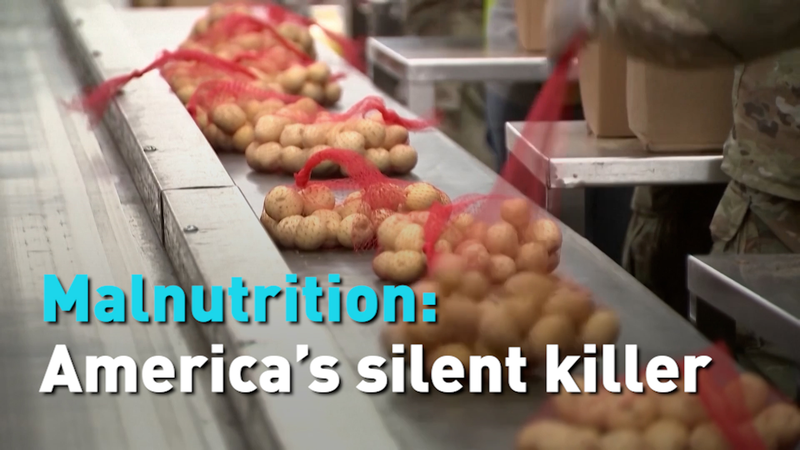
Malnutrition has quietly escalated into a public health emergency across the United States this year, with mortality rates linked to dietary deficiencies reaching alarming levels. Recent data reveals a disproportionate impact on seniors, exposing systemic gaps in elder care and food accessibility.
Healthcare analysts attribute the crisis to converging factors including rising living costs, inadequate nutrition programs for low-income households, and fragmented post-pandemic recovery efforts. "Many elderly patients face impossible choices between medication, housing, and nutritious meals," explained Dr. Alicia Moreno, a geriatric specialist interviewed by CGTN's Ediz Tiyansan.
While federal nutrition assistance programs expanded during the COVID-19 pandemic, most were scaled back by late 2025. Food banks report 40% increased demand since January 2026, particularly in rural communities and urban food deserts. The situation highlights growing concerns about social safety nets as America's population ages – census projections show 1 in 5 residents will be over 65 by 2030.
Public health officials warn that without coordinated federal and state intervention, malnutrition-related complications could overwhelm hospital systems within the next two years. Proposed solutions include Medicare nutrition subsidies and community-based meal delivery networks, though legislative progress remains stalled.
Reference(s):
cgtn.com