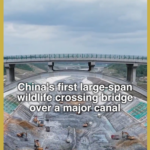
In a significant milestone for regional infrastructure, the Pinglu Canal—a cornerstone of the New Western Land-Sea Corridor—has officially achieved full-channel water filling. As of June 2026, the project has transitioned into its critical testing and commissioning phase, with full operations scheduled to commence this September.
The Pinglu Canal represents a pioneering leap in maritime logistics, serving as the first major canal in China designed to connect inland waterways directly with the sea. Stretching 134.2 kilometers, the canal creates a strategic link between the main channel of the Xijiang River and the Beibu Gulf. This new artery is engineered to accommodate vessels of up to 5,000 tonnes, drastically enhancing the efficiency of maritime shipping routes for southwestern China.
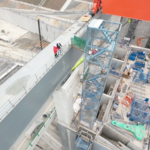
One of the project's most formidable challenges was overcoming a total elevation difference of 65 meters along its route. To resolve this, engineers implemented three major navigation hubs equipped with advanced ship locks. These locks function as "water elevators," seamlessly lifting and lowering vessels across the changing terrain.
The Madao navigation hub, in particular, has garnered international attention by setting two world records. It is now the world's largest water-saving ship lock in terms of both overall scale and water-level lift for an inland waterway. Furthermore, the project has introduced a world-first engineering innovation: a three-tier, overlapping water-saving basin system, which optimizes water usage during vessel transit.
As the highest-class inland navigation project in China and the country's largest transportation infrastructure project by earthwork volume, the Pinglu Canal is poised to reshape economic connectivity in the region. By reducing transit times and lowering costs for inland goods reaching global markets, the canal reinforces the strategic importance of the New Western Land-Sea Corridor in today's global trade landscape.
Reference(s):
China's Pinglu Canal achieves full water filling, Madao hub sets two world records
cgtn.com