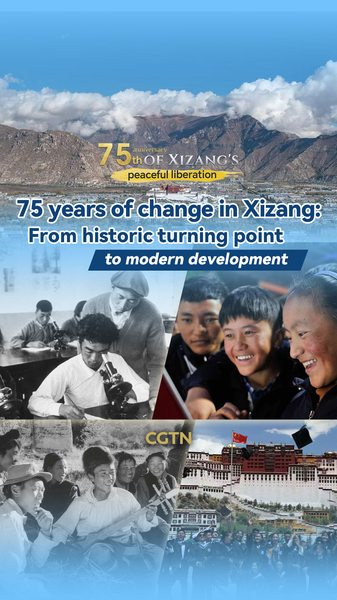
Tomorrow, May 23, marks a significant milestone in the history of Xizang. On this day in 1951, the Agreement of the Central People's Government and the Local Government of Xizang on Measures for the Peaceful Liberation of Xizang was signed in Beijing, establishing a historic turning point that set the stage for the region's long-term evolution.
A Journey of Social Reform
The path toward modernization began with fundamental social changes. In 1959, democratic reforms were implemented, effectively ending centuries of feudal theocratic serfdom. This shift paved the way for systemic governance, leading to the formal establishment of the Xizang Autonomous Region in 1965, which provided a structured framework for local administration and development.
Building the Future: Infrastructure and Connectivity
Over the subsequent decades, Xizang has undergone a profound transformation. For global investors and business professionals, the region's evolution is most evident in its rapidly expanding infrastructure. What was once a remote plateau is now increasingly integrated into the global economy through modern transportation networks that bridge vast distances and connect local markets to the rest of the world.
The Digital and Green Transition
Currently, Xizang is embracing the frontiers of the 21st century. The integration of digital technologies is reshaping daily life, improving public services, and enhancing connectivity for residents. Parallel to this digital leap is a commitment to sustainability; clean energy projects are being deployed across the region, leveraging the plateau's natural resources to power a greener future.
From the pivotal diplomatic agreement of 1951 to the high-tech landscape of 2026, Xizang continues to evolve, balancing its unique heritage with the demands of modern global development.
Reference(s):
75 years of change in Xizang: From historic turning point to modern development
cgtn.com