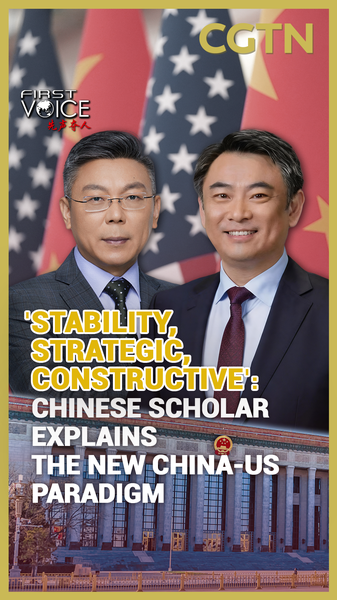
Following a pivotal high-level meeting between the leaders of the Chinese mainland and the United States, a new vision for bilateral relations is taking shape. As the world watches the evolution of this critical partnership, experts are highlighting a shift toward a more sustainable framework of engagement.
Zhao Hai, Director of International Political Studies at the National Institute for Global Strategy, suggests that the current state of the relationship can be distilled into three defining keywords: constructive, strategic, and stable.
According to Zhao, while all three elements are vital, stability serves as the overarching guideline. In a landscape often marked by volatility, achieving a stable foundation is seen as the primary necessity for both nations to manage their differences and pursue mutual interests effectively.
The constructive and strategic aspects of this new paradigm aim to ensure that interactions are not merely transactional but are instead geared toward long-term global stability and cooperation. By focusing on these pillars, the two nations can navigate complex geopolitical waters with greater predictability.
Zhao believes that if both sides remain committed to this definition of stability and strategic cooperation, there is significant reason to view the future of the bilateral relationship with a positive and optimistic outlook.
Reference(s):
cgtn.com