Against a backdrop of shifting global alliances, trade tensions, and a rapidly changing geopolitical order, senior European leaders have been making a series of high-profile trips to the Chinese mainland this year. These visits underscore the complex yet critical nature of China-EU relations in 2026.
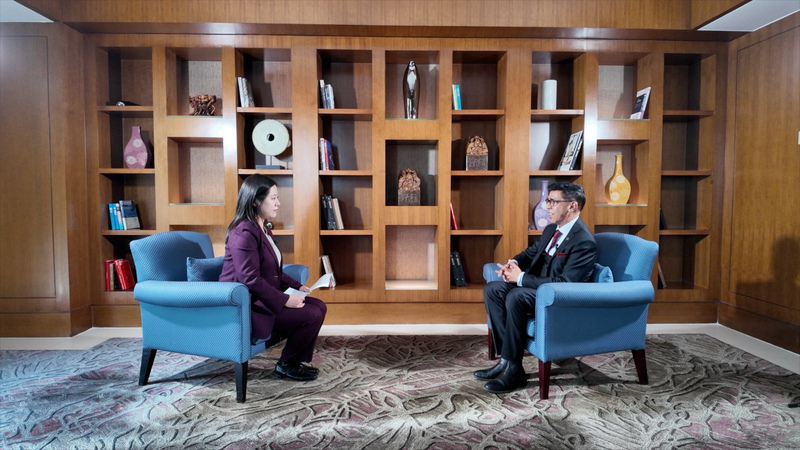
In a recent development, CGTN reporter Feng Yilei sat down with Younous Omarjee, vice-president of the European Parliament, shortly after his meetings with China's senior legislators in Beijing. Their discussion centered on inter-parliamentary exchanges, legislative processes that may reshape coordination, and the future trajectory of China-EU ties.
Omarjee emphasized that stability and balance are key pillars for the relationship. “In these turbulent times,” he noted, “maintaining a steady and equitable dialogue is more important than ever.” The talks in Beijing focused on how parliamentary interactions can foster mutual understanding and address shared challenges, from economic cooperation to global governance.
This dialogue comes as both sides navigate a landscape marked by evolving trade dynamics and strategic recalibrations. The emphasis on legislative engagement points to a deeper institutional approach to managing the relationship, aiming to build resilience against external pressures.
For observers, the message is clear: despite differences, both Europe and China recognize the value of a predictable and balanced partnership. As Omarjee’s visit illustrates, 2026 is witnessing a concerted effort to strengthen ties through structured diplomacy, with stability serving as the cornerstone for future cooperation.
Reference(s):
EU official: Stability and balance key to relations with China
cgtn.com