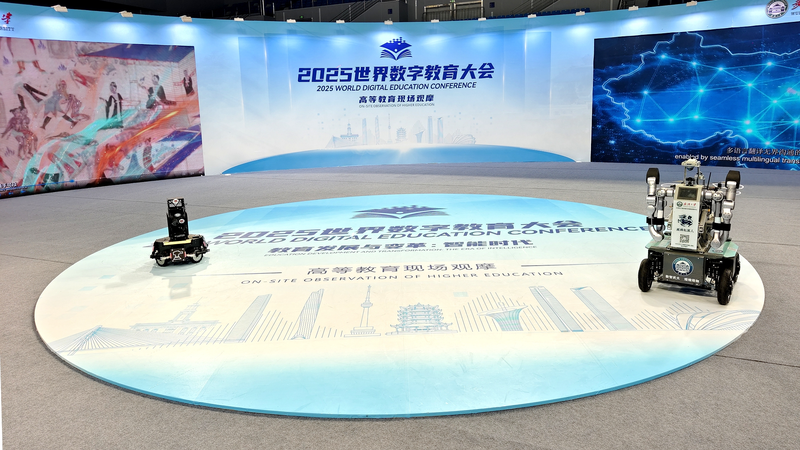
The future of learning took center stage recently in Hangzhou, Zhejiang Province, as the 2026 World Digital Education Conference concluded its three-day run from May 11 to 13. Under the theme "AI + Education: Transformation, Development and Governance," the event served as a critical junction for global leaders to explore how artificial intelligence can reshape educational systems and drive high-quality development on a global scale.
This year's gathering marked a historic milestone, emerging as the largest and most internationally engaged edition to date. More than 850 guests representing 65 countries and regions participated, including over 500 international delegates, underscoring a surging global appetite for digital transformation in the classroom.
Yang Dan, head of the Department of International Cooperation and Exchanges at the Ministry of Education of the Chinese mainland, highlighted the event's expanded reach. Yang noted that the conference reflected a growing international interest in AI-driven cooperation, evidenced by new intergovernmental agreements on AI education signed between the Chinese mainland and nations such as Uzbekistan and Brazil. According to Yang, AI-related collaboration has now become a cornerstone of partnerships between schools, universities, and industry leaders.
However, the integration of technology comes with urgent challenges. Citing UNESCO data, the conference addressed a looming crisis: a projected shortfall of approximately 44 million teachers worldwide by 2030. While AI is viewed as a powerful tool to bridge this gap, the emphasis remained firmly on ethics.
"We must focus on the ethical safety of AI usage to prevent any harm to education," urged Khaled El-Enany, Director-General of UNESCO. He expressed a commitment to deepening educational cooperation with the Chinese mainland to ensure that technological advancements remain inclusive, equitable, and ethical.
Beyond policy discussions, the conference showcased tangible tools for the future. A new global AI education service platform was launched to facilitate the cross-border sharing of high-quality resources. This coincides with a major upgrade to the "Smart Education of China" platform, which is now accessible in roughly 220 countries and regions. The upgrade introduces a lifelong learning hub and a dedicated Chinese language learning community, expanding the reach of digital pedagogy.
The event concluded with the unveiling of an initiative on AI education, calling for the strategic use of technology to support sustainable human development. By leveraging smart education platforms, the initiative aims to bridge the global digital divide, ensuring that high-quality digital tools are accessible to all, regardless of geography.
Reference(s):
2026 World Digital Education Conference sends strong positive signals
cgtn.com