Canada’s Hydropower Faces Decline Amid Extreme Weather Shifts
Canada’s hydropower production declines as extreme weather linked to climate change disrupts output and threatens dam structures, impacting global energy dynamics.
News & Insights Across Asia
Canada’s hydropower production declines as extreme weather linked to climate change disrupts output and threatens dam structures, impacting global energy dynamics.
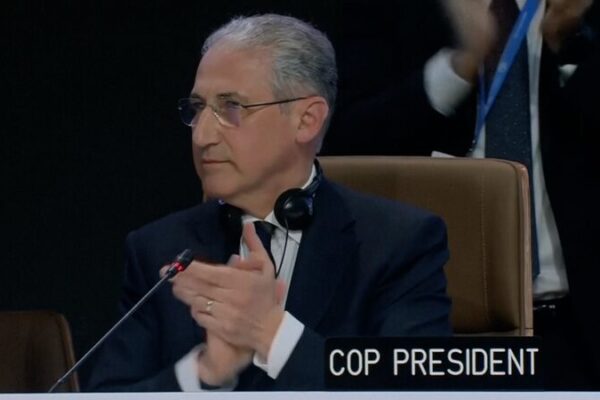
At COP29, developed nations pledged $300 billion to help developing countries combat climate change, far below last year’s commitment. China urges developed nations to fulfill their promises.
At COP29 in Baku, China urged adherence to ‘common but differentiated responsibilities’ as nations agreed on new financial goals to support developing countries in combating climate change.
At COP29, developed countries agreed to contribute $300 billion annually by 2035 to help developing nations combat climate change, marking a significant step in global efforts to address environmental challenges.
COP29 in Baku highlights that financial commitments alone are insufficient to address climate crises. The conference emphasizes climate justice, the role of ecosystems, and the need for systemic solutions.
Young women in China’s Sanjiangyuan region are leading climate action, turning environmental challenges into opportunities for empowerment and community leadership.
Nations in the Global South are bearing a disproportionate share of the climate burden while wealthier countries fall short on promises, as highlighted at COP29 in Baku.
With the COP29 deadline looming, nations intensify negotiations to agree on new climate funding targets, striving for consensus to support global climate action post-2025.
A recent study reveals that warm extremes—periods of unusually high temperatures due to climate change—have challenged Earth’s terrestrial carbon sequestration capacity over the past 40 years.
At COP29 in Baku, China emerged as a global leader in climate action, announcing ambitious renewable energy plans and reaffirming commitments to peak emissions by 2030 and carbon neutrality by 2060.
Addressing the climate crisis demands immediate and collective action. Cities, both vulnerable to and instrumental in fighting climate change, are at the heart of this action.
With global temperatures breaking records and extreme weather events intensifying, the urgent need for coordinated climate action has never been more critical.
Nations at COP29 in Baku are facing a $1 trillion gap in climate finance negotiations, with developing countries calling for $1.3 trillion annually while developed nations offer significantly less.
New research reveals that methane emissions from warming tropical wetlands are surging, posing a significant threat to global climate goals and increasing pressure on governments to cut other emissions.
The G20 is leading the global shift towards clean energy, with members setting ambitious net-zero emission targets. The inclusion of the African Union highlights the need for shared responsibility in combating climate change.
World leaders gather in Rio de Janeiro for the G20 Summit, with poverty alleviation and climate change set to be major priorities on the agenda under Brazil’s ambitious leadership.
Chinese youth delegates at COP29 are making their presence felt through cultural exchanges and a strong commitment to global climate action.
Green protectionism is emerging as a significant barrier to global climate initiatives, hindering the adoption of green technologies and disrupting international cooperation towards a sustainable future.
A recent CGTN poll reveals that 83.5% of global respondents positively evaluate China’s contributions to climate governance, highlighting its leading role in combating climate change through concrete actions.
China has unveiled a new action plan to strengthen climate change adaptation and early warning systems in developing countries, announced during COP29 in Baku, Azerbaijan.