A New Strategic Era
In a move that signals a transformative shift in regional cooperation, China and Laos have decided to elevate their relationship to an all-weather China-Laos community with a shared future in the new era. This strategic transition marks a pivot from a model primarily led by infrastructure development toward one driven by technological capability and sustainable growth.
Bridging the Technological Gap
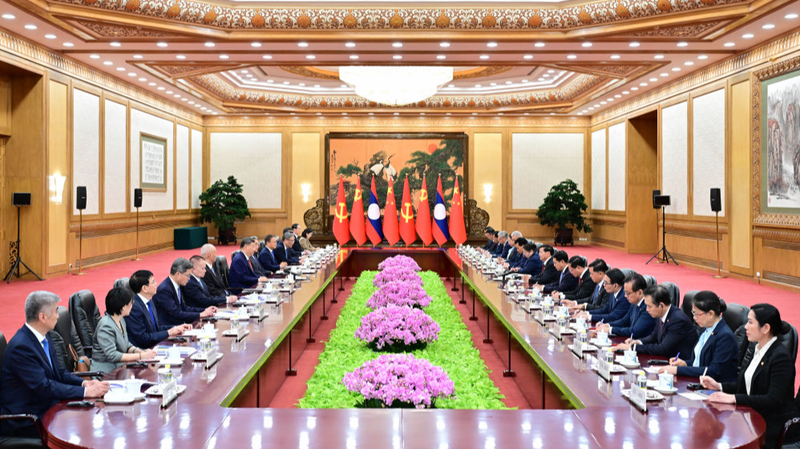
As the global economy enters a period defined by artificial intelligence (AI), robotics, and advanced manufacturing, developing nations face the challenge of becoming active participants in future industries rather than mere consumers of external technology. The recent meeting between Chinese President Xi Jinping and Lao President Thongloun Sisoulith addressed this head-on, establishing a partnership designed for the technological realities of the next decade.
The scope of this cooperation is comprehensive, spanning inter-party exchanges, trade, finance, customs, youth engagement, and media cooperation, ensuring that the partnership benefits all levels of society.
From Land-Locked to Land-Linked
For years, the cornerstone of the bilateral relationship has been physical connectivity. The China-Laos Railway, operational since 2021, has been a catalyst for change, effectively transforming Laos from a landlocked country into a land-linked economy. The impact is evident in the numbers: the railway has facilitated over 73 million passenger trips and transported more than 80 million tons of cargo.
This physical foundation has paved the way for significant economic growth. Bilateral trade reached approximately $9.82 billion in 2025, with cumulative Chinese investment in Laos exceeding $18 billion. However, both nations recognize that while roads and rails provide the necessary connectivity, future competitiveness depends on digital literacy, innovation ecosystems, and human capital.
A Vision for the Global South
The Chinese premier, Li Qiang, emphasized China's commitment to aligning its development strategies with those of Laos. Looking forward, Beijing aims to scale up bilateral trade and accelerate the construction of the China-Laos Economic Corridor. This effort will expand into critical future-facing sectors, including the digital economy, energy, mineral resources, and AI.
By shifting toward a capability-driven model, China and Laos are not only enhancing their own prosperity but are also providing a blueprint for shared modernization within the Global South, demonstrating how strategic partnerships can evolve to meet the demands of the digital age.
Reference(s):
China-Laos ties: The Global South's new path for shared modernization
cgtn.com