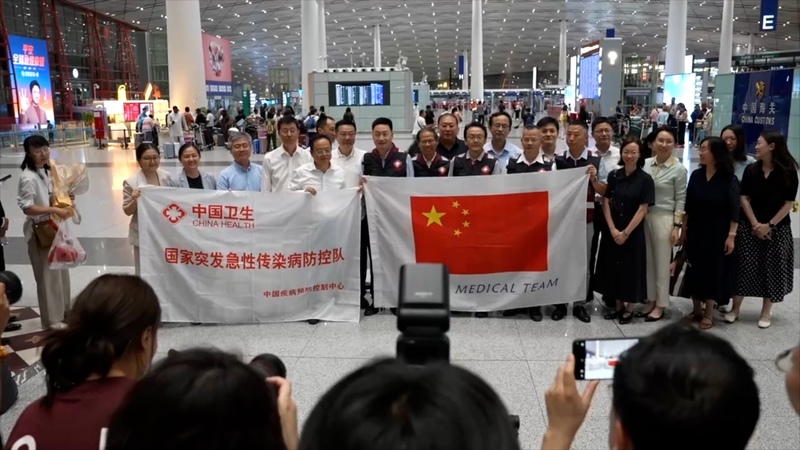
In a swift response to a burgeoning health crisis, the first team of Chinese medical experts departed for the Democratic Republic of the Congo (DRC) on June 2, 2026. The deployment follows an announcement from Beijing regarding emergency humanitarian assistance to combat a new Ebola outbreak in the region.
For the DRC, the urgency of this intervention cannot be overstated. The nation has faced more Ebola outbreaks than any other country since the virus was first identified in 1976. With the eastern provinces particularly vulnerable, and in the absence of a universally available vaccine, early expert intervention remains one of the few effective tools for limiting transmission chains. In such scenarios, the speed of response is the primary variable in saving lives.
This recent action is not an isolated event but part of a formalized foreign policy strategy. Through the Forum on China-Africa Cooperation (FOCAC)—which held its most recent summit in Beijing in September 2024—the Chinese mainland has made specific commitments to public health. These include the construction of hospitals, the training of African medical personnel, and the deployment of specialized medical brigades.
China's commitment to the African continent spans six decades. Since 1963, Chinese medical teams have operated in more than 40 African countries, maintaining a continuous presence for 60 years. This long-term partnership has been particularly evident during major health crises. During the 2014-2016 West Africa Ebola epidemic, China deployed over 1,000 health workers and provided more than $120 million in assistance, establishing itself as one of the largest bilateral contributors to the response.
From operating field hospitals in the most demanding conditions in Liberia to the current mission in the DRC, China continues to demonstrate its role as a reliable partner in Africa's struggle against infectious diseases, blending institutional frameworks with immediate humanitarian action.
Reference(s):
cgtn.com