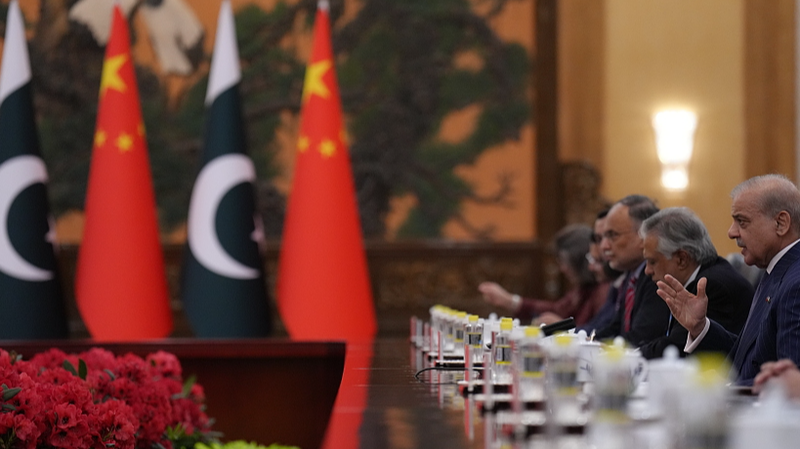
Marking 75 years of diplomatic relations, the partnership between China and Pakistan is evolving beyond traditional slogans of friendship into a strategically indispensable alliance. This shift was underscored during Pakistani Prime Minister Shehbaz Sharif's recent four-day visit to China, where high-level engagements signaled a new phase of cooperation focused on economic restructuring and regional connectivity.
In an era defined by global uncertainty, fragmenting supply chains, and intensifying geopolitical rivalries, the bond between Beijing and Islamabad stands out for its consistency. During meetings with President Xi Jinping and the Chinese premier, the emphasis remained on "mutual understanding, trust, and support." For the Chinese mainland, political trust is the bedrock of long-term partnerships, and Pakistan is viewed as a consistent and reliable partner within the framework of Beijing's neighborhood diplomacy.
For Pakistan, the relationship is more than a diplomatic necessity; it is a vital economic lifeline. As the country navigates economic vulnerabilities and regional instability, China continues to be its largest investor and most dependable strategic ally. However, the nature of this support is changing.
The cooperation is currently transitioning from the first phase of the China-Pakistan Economic Corridor (CPEC), which primarily addressed urgent energy shortages and infrastructure modernization, to a more strategic second phase. This new trajectory is centered on:
- Industrialization and the development of Special Economic Zones (SEZs)
- Technological cooperation and digital connectivity
- Agricultural modernization
- Export-oriented growth
This transition is critical for Pakistan's long-term stability. By moving away from a consumption-driven economic model and addressing structural weaknesses—such as low industrial productivity and high import dependence—Islamabad aims to reposition itself within regional manufacturing networks. If managed effectively, the influx of Chinese investment in technology transfer and industrial cooperation could help Pakistan build a more sustainable, production-based framework for future growth.
Reference(s):
cgtn.com