The recent May Day holiday in the Chinese mainland highlighted a significant evolution in how people travel and spend. While traditional sightseeing remains popular, a new trend is emerging: the "event-driven" economy, where major sports, arts, and cultural events serve as the primary catalyst for regional travel and consumption.
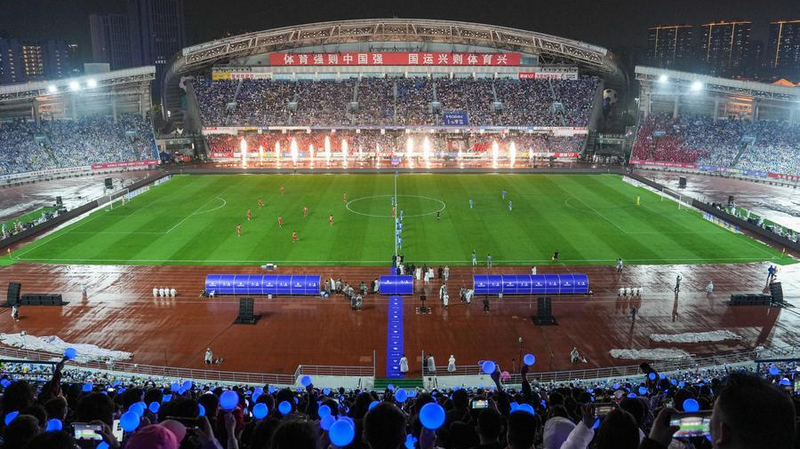
A prime example occurred on May 1 at the Shanghai Stadium, where a football match between Shanghai Shenhua and Chengdu Rongcheng drew a massive crowd of 61,815 spectators. Beyond the thrill of the game, the economic impact was substantial. Estimates suggest that spending directly linked to the event reached 135 million yuan (approximately $19.77 million), while the broader economic pull reached an estimated 375 million yuan, supporting over 1,500 jobs.
This phenomenon illustrates a broader shift in consumer behavior. Rather than simply visiting a city, households are increasingly organizing their entire itineraries—including transport, hotels, and dining—around a specific "anchor" event. Whether it is a high-stakes football match, a music festival, a marathon, or an immersive exhibition, the event ticket has evolved from a simple entry pass into the starting point of a comprehensive consumption chain.
The scale of this movement is reflected in recent transport data. The Ministry of Transport estimated that over 1.52 billion cross-regional trips were made during the holiday, marking a record high. The railway system also saw unprecedented activity, with China State Railway Group Co., Ltd. reporting a single-day record of 24.8 million passengers on May 1. Such high levels of mobility are critical, as they transmit demand directly to local businesses across various regions.
Furthermore, "new consumption scenarios" are gaining momentum. Data from the services platform Meituan revealed that searches for music festivals quadrupled starting in April, signaling a surge in interest for live performances. From handicraft workshops and travel photography to hot-air-balloon rides, experiential activities are becoming the new priority for travelers. This shift suggests that holiday consumption in the Chinese mainland is moving away from passive observation and toward active participation, experience, and social sharing.
Reference(s):
From match day to market demand: China's new holiday economy
cgtn.com