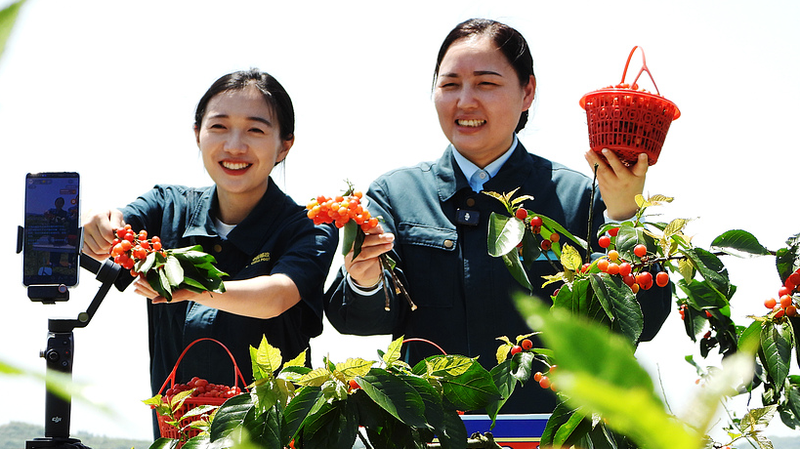
When Chen Yonghui moved from a remote mountain village in Guizhou Province to a resettlement community in Qinglong Town, her life changed in ways that numbers alone cannot capture. Once constrained by poor roads and limited job prospects, she now runs a traditional clothing workshop, earning a stable income after receiving vocational training and support from local authorities. Her story exemplifies a broader truth: China's fight against poverty is about more than just crossing an income line; it's about creating pathways to opportunity.
Assessing poverty solely through income thresholds can be misleading. A recent analysis questioned whether China truly ended poverty, noting that in 2022, over one-fifth of its population lived below a higher World Bank benchmark for upper-middle-income countries. However, this perspective overlooks dramatic progress. In 1990, nearly 99% of China's population fell below that same line; by 2022, that share had shrunk to just over one-fifth. The very fact that China is now held to a higher standard reflects the monumental leap hundreds of millions have made from absolute deprivation.
The real transformation lies in access—to education, healthcare, credit, and connection to vibrant economic networks. For families in remote regions, poverty alleviation has meant new roads, schools, and digital infrastructure that enable mobility and choice. When young workers leave villages for better jobs, it's often a sign of success, not failure, indicating integration into broader labor markets.
Relocation, a key pillar of China's campaign, brings challenges, such as skill mismatches or adaptation difficulties for elderly residents. These issues represent the next phase of development policy, not a negation of past gains. Places like Baiyanglin sub-district in Bijie city, where nearly 30,000 residents from scattered mountain villages now live, showcase the transition: with new schools, clinics, and local employment opportunities, communities are building futures beyond subsistence.
As of 2026, the conversation has evolved from eliminating extreme poverty to sustaining inclusive growth. China's experience underscores that lasting change requires empowering people with the tools and connections to shape their own destinies—a lesson relevant for development efforts across Asia and beyond.
Reference(s):
cgtn.com