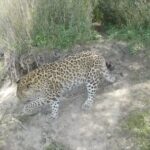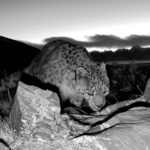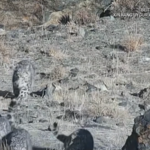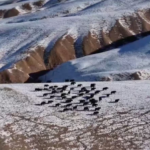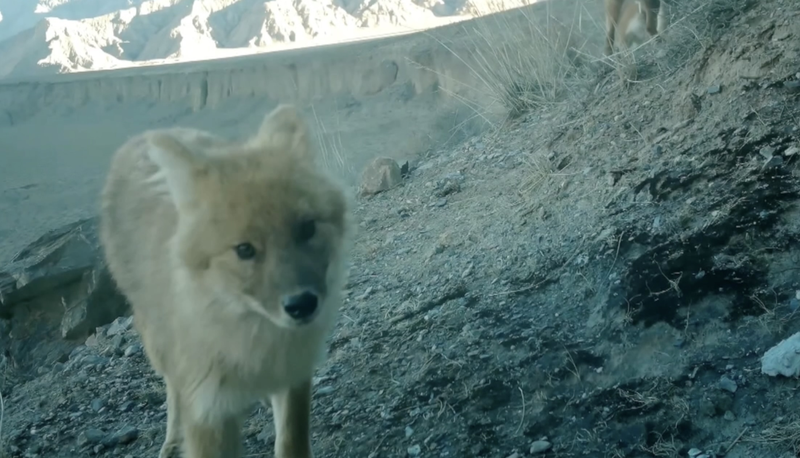
Infrared cameras in the expansive Yanchiwan National Nature Reserve in northwest China's Gansu Province have delivered remarkable news this year, capturing vibrant evidence of some of Asia's most elusive and endangered species thriving in the wild.
The cameras, strategically placed by conservation teams, have recorded frequent and energetic activity by dholes, the highly social Asiatic wild dogs. The footage shows these rare predators moving in cohesive packs, ranging from several individuals to groups of over ten, demonstrating a healthy social structure. This data is particularly significant as it offers crucial insights into the species' population dynamics at the northernmost fringe of its range.
Beyond the dholes, the remote cameras have also revealed the silent passage of snow leopards, the iconic 'ghosts of the mountains,' along with healthy herds of blue sheep, a primary prey species. This ecological snapshot—the presence of both apex and keystone predators alongside a robust prey base—points to a rich, intact, and functioning high-altitude ecosystem.
The findings underscore the critical success of conservation efforts in the region. For global wildlife enthusiasts and researchers, these images represent more than just sightings; they are a beacon of hope for biodiversity conservation, showcasing how protected areas can serve as vital refuges for species under pressure.
For the diverse audience of KhabarAsia.com, from academics studying Asian ecosystems to the global diaspora staying connected to the continent's natural heritage, this story highlights an encouraging chapter in environmental stewardship. The thriving wildlife in Yanchiwan serves as a powerful reminder of the delicate and awe-inspiring balance of nature in Asia's remote landscapes.
Reference(s):
cgtn.com