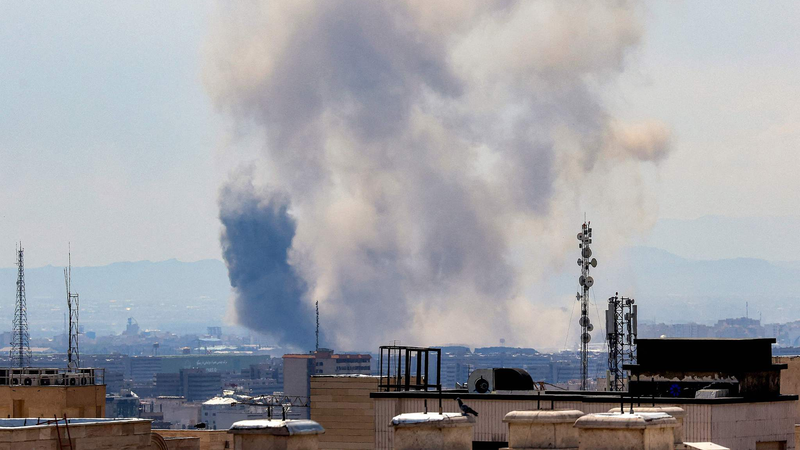
In a significant escalation of regional tensions, Israel's Defense Minister has warned that the country may resume military strikes against Iran "soon." This stark warning comes as diplomatic negotiations aimed at de-escalating the longstanding conflict have reportedly reached a stalemate.
The development follows a period of intense international mediation. Iran has reportedly submitted a new proposal through a Pakistani mediator, indicating a continued, albeit stalled, diplomatic channel. The proposal's content remains undisclosed, leaving regional actors and analysts in a state of uncertainty about Tehran's latest position.
Adding another layer of complexity to the situation, US President Donald Trump weighed in on the impasse. While speaking to reporters earlier this week, President Trump stated that Iran is "dying to make a deal." However, his remarks provided little clarity on the substance of any potential agreement or a clear path forward for the stalled talks.
Meanwhile, in Washington, a procedural clock is ticking. Officials are now facing a 60-day legal deadline under the War Powers Resolution. Some US officials have begun to argue internally that a recent ceasefire may have already "terminated" the formal state of conflict, a legal interpretation that could have significant implications for future US military involvement in the region.
On the other side, Iran's leadership has remained defiant. Senior officials have publicly vowed to defend the country's nuclear and missile programs, which they describe as matters of national sovereignty and security. They have firmly rejected recent US claims justifying actions as "self-defense," framing them as pretexts for aggression.
The current standoff underscores the fragile and volatile nature of security in the Middle East. For global investors, the threat of renewed conflict poses risks to energy markets and regional stability. Academics point to the breakdown in dialogue as a critical failure of multilateral diplomacy. For the global diaspora from the region and international observers alike, the prospect of renewed hostilities is a cause for deep concern.
As of May 2026, the world watches closely, hoping for a diplomatic breakthrough that can avert another cycle of violence in one of Asia's most strategically vital and unstable regions.
Reference(s):
cgtn.com