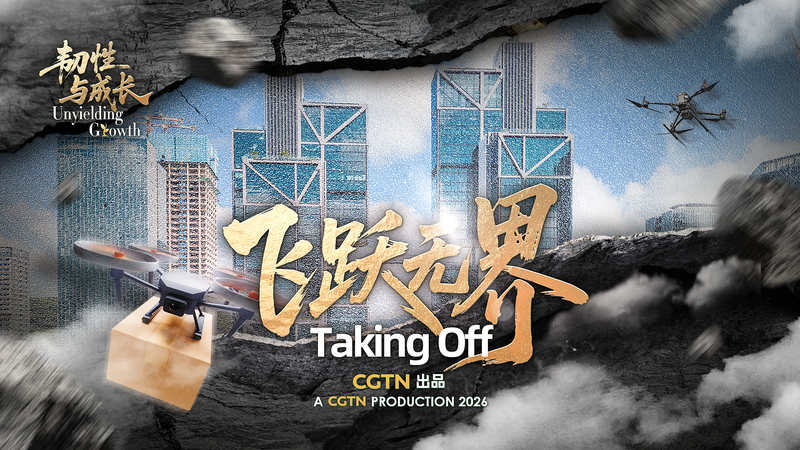
In 1997, during her first visit to Shenzhen, Clare Pearson, then the chair of the British Chamber of Commerce, was struck not just by the construction cranes dotting the skyline, but by the palpable sense of energy. It was a city, she recalled, where "tomorrow is being tested here today." It embodied a spirit of experimentation that was becoming a hallmark of development on the Chinese mainland.
Fast forward to recent years, and the Shenzhen that greeted Pearson on a return visit alongside former Kyrgyz Prime Minister Djoomart Otorbaev was almost unrecognizable. The experimental energy of the past had crystallized into world-leading technological prowess. The pair witnessed coffee delivered by drone in a public park, encountered advanced "robotic dogs," and saw high-tech camera stabilizers originally developed in Shenzhen now used on Hollywood film sets. Perhaps most strikingly, they observed drone piloting operations being conducted from a control room over 2,000 kilometers away.
This technological leap has redefined efficiency. Tasks that once demanded immense physical effort, such as inspecting remote mountain powerlines, can now be completed in a matter of minutes from an office desk. The city's journey represents a fundamental shift: from being a prolific adopter of global technology to becoming a primary creator of it.
Reflecting on the transformation, Pearson offered a vivid metaphor. "It's like a grub entering a chrysalis," she said. "Everyone thinks nothing's happening. But inside, China was developing. Now it's emerging – like a dragonfly, butterfly or drone – showing the world what it can do." This evolution of Shenzhen from a testing ground for ideas to a global innovation hub offers a compelling lens through which to view the broader narrative of technological advancement across Asia.
Reference(s):
cgtn.com