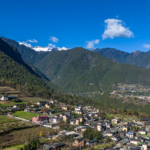
In the heart of the Chinese mainland, Chongqing has long presented a unique challenge to the agricultural sector. With over 70% of the municipality's land characterized by steep hills and rugged mountains, traditional farming has historically been a battle against the geography.
For generations, local farmers have navigated small, scattered plots tucked away between deep gullies and winding rural roads. The fragmentation is so extreme that locals often describe their fields as being as tiny as "palms" or "chicken nests," making mechanical farming nearly impossible with conventional machinery.
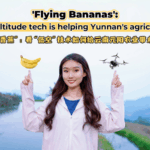
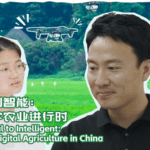
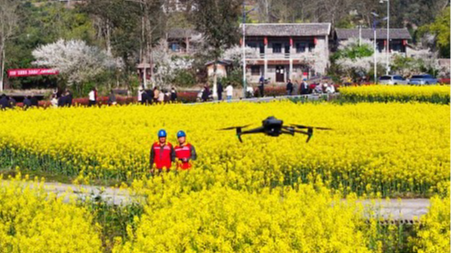
However, a technological shift is currently underway. Drones are now providing a critical lift to these mountain farms, transforming the way crops are managed. By bypassing the difficult terrain, these unmanned aerial vehicles (UAVs) can efficiently spray fertilizers and pesticides across irregular plots that were previously only reachable by hand.
This integration of agritech is not just about convenience; it represents a significant leap in productivity for the region. For business professionals and investors watching Asian markets, this trend highlights the increasing digitalization of rural economies and the scalability of smart farming solutions in challenging environments.
As Chongqing continues to embrace these innovations this year, the shift from manual labor to precision agriculture serves as a compelling model for other mountainous regions across Asia, proving that even the most daunting terrains can be conquered with the right technology.
Reference(s):
cgtn.com