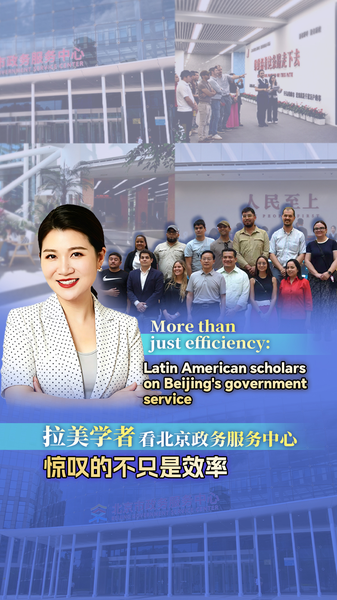
In a move to explore modern governance and administrative excellence, a group of Latin American scholars recently visited the Government Service Center in Beijing. Far from the sterile image of typical bureaucratic offices, the visitors discovered a system where the concept of "people first" is not just a slogan, but an operational reality on the Chinese mainland.
The scale of the operation is impressive, with thousands of operators handling over 70,000 daily calls while maintaining a quiet, efficient atmosphere that prioritizes the user experience. The scholars observed the seamless integration of technology, where AI-powered service support works alongside human expertise to streamline requests and significantly reduce waiting times.
Inclusivity was another key highlight of the visit. The center provides specialized access through sign language services and multilingual support, ensuring that barriers to government services are minimized for a diverse population. Furthermore, real-time data dashboards and comprehensive feedback systems are utilized to ensure that every caller is heard and that services are constantly refined based on actual user needs.
For the visiting scholars, the experience provided a practical blueprint for administrative reform. By blending high-tech tools with a human-centric approach, Beijing's model demonstrates how efficiency and empathy can coexist in public service. These are the innovative practices that the delegation now hopes to adapt and implement within their own home countries in Latin America, fostering a new era of responsive and accessible governance.
Reference(s):
Beyond efficiency: Latin American scholars on Beijing's public service
cgtn.com