In a landmark achievement for medical science, a clinical trial in the Chinese mainland has successfully restored partial sight to a completely blind patient using a cutting-edge brain-computer interface (BCI) technology. The patient, who suffered from retinitis pigmentosa, is now able to recognize basic Chinese characters and navigate indoor environments independently.
A Technological Leap in Artificial Vision
The breakthrough was led by Professor Xu Huizhuo and his team at Xiangya Hospital at Central South University. The technology at the heart of this success is the Intelligent Micro Implant Eye (IMIE) epiretinal prosthesis system, a self-developed innovation designed to bypass damaged retinal cells and deliver visual information directly to the brain.
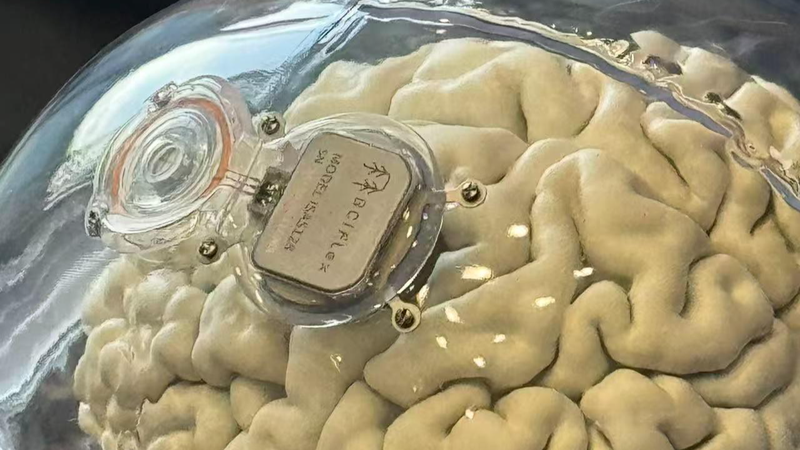
The system operates through a sophisticated synergy of hardware. The patient wears a customized pair of glasses equipped with a high-definition camera that captures the surrounding environment. This visual data is processed and transmitted wirelessly to an active intraocular implant. Once received, a 256-channel flexible electrode array stimulates healthy ganglion cells in the macular region. These signals then travel through the optic nerve to the visual cortex, where the brain interprets them as artificial vision.
The Path to Recovery
The journey to sight restoration is not instantaneous. After receiving the implant in April this year, the patient underwent extensive rehabilitation training. Because artificial vision differs significantly from natural sight, the brain must be trained to interpret the new electrical signals.
Following this period of adaptation, the patient has demonstrated the ability to identify symbols on an eye chart and move around indoors without assistance. Researchers expect that continued training over the coming months will further enhance her object recognition and daily living skills.
Impact on Global Health
This milestone fills a critical gap in the Chinese mainland's domestically developed artificial retina technology. By proving the efficacy of the IMIE system, the trial offers renewed hope to millions of people globally who suffer from degenerative retinal diseases.
For business professionals and investors in the biotech sector, this development signals the accelerating pace of BCI applications in healthcare, moving beyond communication tools into the restoration of sensory functions. As the technology matures, it could redefine the approach to treating permanent vision loss.
Reference(s):
cgtn.com