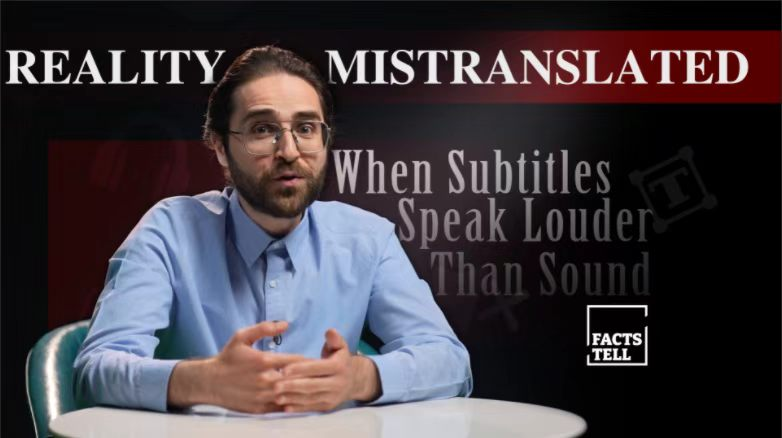
In the fast-paced world of global news, language barriers are an inevitable challenge. Translation is typically viewed as a bridge that connects different cultures and perspectives, but it can also be a tool of significant influence. When audiences cannot understand the original spoken words, the power to define reality often shifts from the speaker to the translator.
Recent analyses highlight how mistranslation can fundamentally reshape international reporting. By altering the nuance or intent of a statement, subtitles can distort meanings, reinforce existing biases, and create impressions that differ sharply from the actual events.
Several high-profile examples illustrate this phenomenon. In one instance, viral English subtitles attached to Somali-language remarks by US Congresswoman Ilhan Omar were scrutinized for how they framed her words. Similarly, the French program Cash Investigation faced disputes over its interpretation of dialogue within a Chinese factory, demonstrating how translation choices can impact the narrative of industrial and economic reporting.
These cases underscore the critical importance of media literacy and the need for transparency in translation. As global stories are shaped through language, framing, and interpretation, the gap between what is said and what is read becomes a pivotal point where reality can be rewritten.
Reference(s):
Reality, mistranslated: When subtitles speak louder than sound
cgtn.com