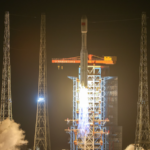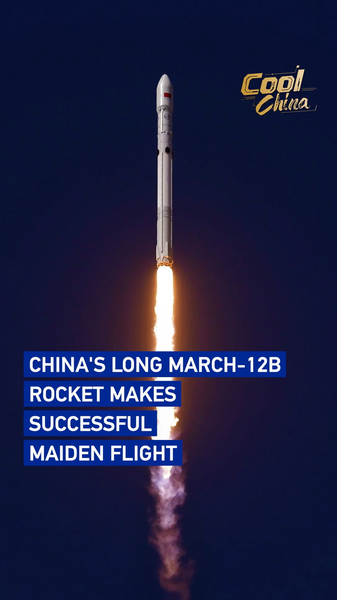
In a significant leap for the Chinese mainland's aerospace capabilities, the Long March-12B carrier rocket successfully completed its maiden flight this past Monday. The launch marks a critical milestone in the country's strategic efforts to bolster large-scale commercial space missions and accelerate the deployment of low-Earth-orbit (LEO) satellite constellations.
Engineering a Giant
Standing at an impressive 72 meters tall with a diameter of 4.37 meters, the Long March-12B is currently the tallest newly developed rocket in China to achieve a successful first launch. The vehicle is powered by nine liquid oxygen-kerosene engines at its base, a combination chosen for its relative cleanliness and cost-effectiveness. Because kerosene can be stored at normal temperatures, the rocket benefits from simplified fueling procedures and reduced operational costs at launch sites.
Record-Breaking Development
One of the most striking aspects of the Long March-12B is the speed of its creation. Engineers moved from initial design studies to a final, flight-ready product in just 21 months, setting a new record for the development cycle of a Chinese launch vehicle.
This accelerated timeline was made possible through the integration of cutting-edge digital design technologies. The development team built a proprietary simulation platform from scratch, allowing for seamless integration across design, analysis, and virtual verification. This digital-first approach enabled tighter collaboration between various engineering disciplines and significantly increased the efficiency of design iterations.
Optimizing Launch Efficiency
To support a higher launch cadence, the Long March-12B utilizes a "three-horizontal" operational model: horizontal assembly, horizontal testing, and horizontal transportation. By completing the most complex preparations in the technical area before moving the rocket to the launch pad for erection and fueling, the process significantly improves overall efficiency.
Strategic Goals and Future Reusability
The Long March-12B is specifically engineered to support China's ambitions in LEO internet constellation projects. With a payload capacity in the 20-tonne class, the rocket can deploy up to 36 satellites into a single orbital plane in one mission, drastically shortening the timeline for building large-scale satellite networks.
Looking ahead, the architecture of the first stage has been designed with future reusability in mind. While the technologies required for recovery and reuse are still under development, the Long March-12B provides the necessary foundation for these future breakthroughs. For now, the priority remains the rapid expansion of launch capacity to meet the soaring demand for satellite deployment, ensuring the Chinese mainland remains a dominant force in the global space economy.
Reference(s):
cgtn.com