The Chinese mainland continues to make significant strides in environmental restoration and climate monitoring, as revealed in the latest National Ecological Meteorological Bulletin (2025). The report, released by the China Meteorological Administration (CMA) during a press briefing in Beijing, highlights a period of remarkable ecological recovery and resilience.
Ecological Quality on the Rise
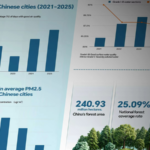
According to the bulletin, hydrothermal conditions across the Chinese mainland in 2025 surpassed long-term averages. Most notably, the overall vegetation ecological quality was ranked as the second best since the year 2000. Xiao Chan, deputy director of the National Meteorological Center, noted that the national vegetation ecological quality index reached 69.1, which is 6.6 percent above the climatological mean.
The data indicates that approximately 66 percent of the country's land area is now rated as "good" to "excellent." These improvements are particularly evident in key areas of environmental protection, including enhanced water conservation, soil retention, and more effective windbreak and sand-fixation efforts.
Navigating El Niño Patterns
While ecological markers are positive, meteorological experts are keeping a close watch on Pacific weather patterns. El Niño conditions have emerged in the equatorial central-eastern Pacific and are expected to strengthen to at least moderate intensity, likely peaking during the autumn and winter seasons.
Historically, this pattern suggests a trend of higher temperatures across many parts of the Chinese mainland, alongside above-normal rainfall south of the Yangtze River during the summer and autumn months. This foresight allows for better preparation and resource management to mitigate potential climate risks.
A Global Push for Monsoon Science
Looking beyond national borders, the CMA has announced a major collaborative effort to tackle global climate volatility. Experts from multiple regions have endorsed the Asia–Australia–Africa Monsoon international science program. This initiative focuses on research into extreme weather events using a coupled Earth-system framework.
A key component of the program is the integration of AI-enabled forecasting and advanced risk services. By combining meteorological expertise with cutting-edge technology, participating parties aim to strengthen climate-risk prevention and control across monsoon regions worldwide, contributing to a more sustainable and secure global future.
Reference(s):
cgtn.com