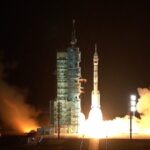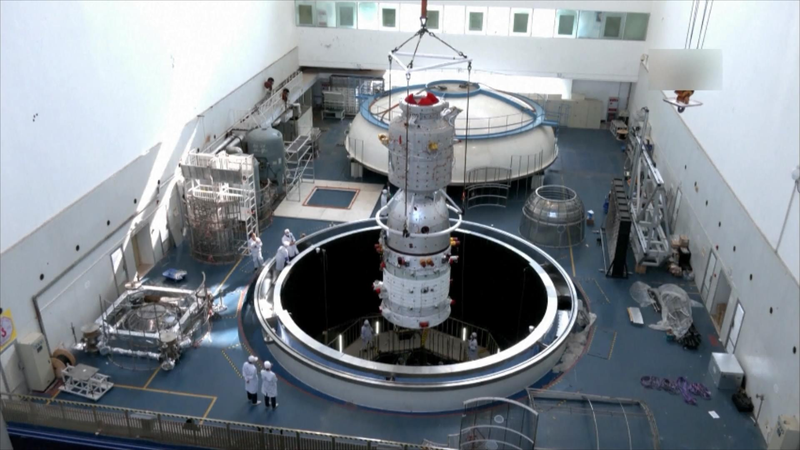
In a significant move to ensure astronaut safety and maximize scientific output, Chinese scientists have implemented critical upgrades to the Shenzhou-23 spaceship. The enhancements, carried out at the launch site, focus on reinforcing the spacecraft's porthole to mitigate risks posed by space debris.
Prioritizing Astronaut Safety
The decision to accelerate these improvements follows a suspected impact from space debris on the Shenzhou-20 return capsule viewport during its mission last year. While the Shenzhou-20 crew returned safely on November 14, 2025, the incident prompted a comprehensive safety assessment. Originally, the porthole upgrade was slated for the Shenzhou-24 mission, but officials decided to move the timeline forward to the Shenzhou-23 to eliminate potential emergencies.
He Yu, chief commander of the Shenzhou spacecraft at the China Aerospace Science and Technology Corporation, explained the technical shift. The previous viewport design featured a single layer of anti-ablation glass. The new design increases this to two layers for dual redundancy, complemented by an additional protective measure inside the capsule. This creates a robust three-layer anti-ablation system, providing a vital safety net for astronauts living and working in orbit.
Implementing these changes presented a unique engineering challenge. Typically, viewport windows are installed at the assembly workshop in Beijing. However, because the Shenzhou-23 was already manufactured and stationed on emergency standby at the Jiuquan Satellite Launch Center, technicians had to perform the upgrade after the three modules had already been assembled, working within the confined space of the capsule.
Boosting Scientific Return
Beyond safety, the Shenzhou-23 has seen a dramatic increase in its return payload capability. The transport capacity has been doubled, moving from the previous specification of 50 kilograms to over 100 kilograms, with the available payload volume expanding threefold.
According to He Yu, this increase was achieved through a combination of the miniaturization of the cabin's instrumentation system and an intensive reconfiguration of the interior space layout. These optimizations free up significant weight and spatial resources, allowing the mission to bring a larger array of scientific experiment payloads back to Earth.
Mission Outlook
The Shenzhou-23 manned mission will be carried out by astronauts Zhu Yangzhu, Zhang Zhiyuan, and Lai Ka-ying. The crew will travel to China's space station, where one of the members is scheduled to remain for a full year, continuing the nation's commitment to long-term human presence in space.
Reference(s):
Chief commander explains improvements of the Shenzhou-23 spaceship
cgtn.com