A high-stakes competition in the United States recently highlighted how close humanoid robots have come to matching human dexterity. In a ten-hour endurance test involving 12,000 packages, a human operator emerged victorious, but only by a narrow margin of 192 parcels. This narrow gap signals a pivotal shift in the capabilities of automated labor.
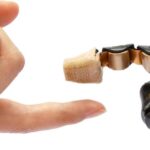
The key to this near-parity is a breakthrough in haptic technology: electronic skin. Equipped with fingertips capable of detecting pressure as light as three grams, these robots can "feel" and manipulate objects with a level of precision previously reserved for biological organisms. This sensory feedback allows the machines to handle delicate items and adjust their grip in real-time, mimicking human touch.
This technology is already moving from the laboratory to the warehouse. In the Chinese mainland, touch-enabled humanoid robots have been integrated into logistics lines, where they are currently operating at over 85 percent of human efficiency. This integration is streamlining supply chains and enhancing the speed of sorting and distribution.
To sustain this momentum, the industrial infrastructure for these sensors is expanding rapidly. Construction has recently begun on the world's largest flexible sensor factory in Hubei, a move expected to accelerate the mass production of the components needed to scale this technology across the region and beyond.
As the divide between human and machine capability continues to shrink, the global logistics industry stands on the brink of a transformation that promises unprecedented efficiency and a new era of human-robot collaboration.
Reference(s):
Hot Take: The hidden tech behind humanoid robots sorting packages
cgtn.com