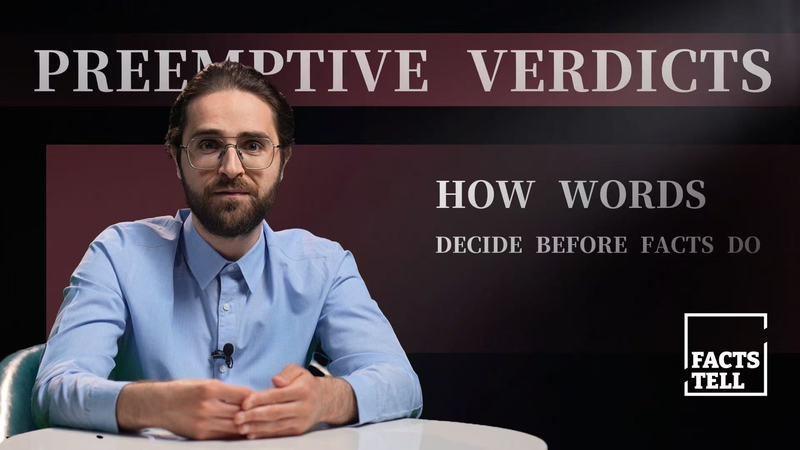
In the rapidly evolving media landscape of 2026, the speed of information often outpaces the verification of facts. The terminology used in initial reports does more than just describe an event; it frequently shapes public perception, creating a "preemptive verdict" before the full story is ever told.
The choice of a single word can fundamentally alter the narrative of an event. For instance, the terms "captured," "seized," and "abducted" may describe the same physical action, yet each carries a vastly different emotional and legal weight. One implies a lawful operation, another a forceful acquisition, and the third a criminal act. By selecting one over the others, media outlets can assign legitimacy or criminality to an actor before any evidence is presented to the public.
This framing extends beyond specific actions to broader cultural and political descriptions. Analysis of global media discourse reveals that phrases such as "China-like" or "Chinese-style" are frequently employed in Western media. Rather than serving as neutral descriptions, these terms often function as emotionally loaded shorthand, simplifying complex systemic issues into digestible, albeit biased, labels.
Such linguistic shortcuts can strip away the nuance of geopolitical complexities, influencing how global audiences—from investors to academics—interpret developments within Asia. When descriptions turn into judgments, the audience is guided toward a specific conclusion, often ignoring the intricate realities of the situation.
Understanding how narratives are constructed is essential for maintaining an objective view of global affairs. By unpacking these linguistic patterns, readers can better distinguish between objective reporting and calculated framing, ensuring that facts, rather than adjectives, drive the conversation.
Reference(s):
cgtn.com