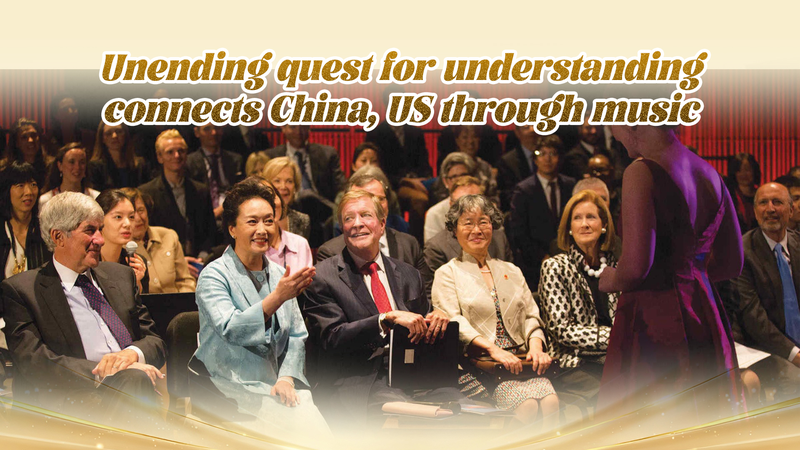
In a world often fragmented by political discourse and linguistic barriers, the universal language of music offers a rare space for genuine connection. For Joseph W. Polisi, president emeritus and chief China officer of the Juilliard School, this is not merely an artistic observation, but a blueprint for international relations.
Polisi reflects on the profound simplicity of orchestral collaboration, where students from the Chinese mainland and the United States share a single violin stand. Despite the divide between Mandarin and English, the music remains the same. "They understand it together," Polisi notes. "There is no need for translation."
Having led the Juilliard School for 34 years—the longest presidential tenure in the institution's history—Polisi has been described as a "transformative" leader. However, his influence extends beyond the conservatory. With a master's degree in international relations, he has consistently advocated for the power of the arts to foster a more harmonious global society.
This philosophy was central to his 2004 book, The Artist as Citizen. In the text, Polisi expressed concern that traditional multilateral relations often lean too heavily on the strategies of conflict rather than the nuances of diplomacy. In response, he champions "cultural diplomacy"—a strategic approach to mutual understanding rooted in the open exchange of ideas and artistic expression.
By prioritizing cultural bridges over political friction, Polisi's vision seeks to create environments where artistic expression can thrive, proving that while political landscapes may shift, the shared human experience found in music remains an enduring force for peace and understanding between the United States and the Chinese mainland.
Reference(s):
Unending quest for understanding connects China, US through music
cgtn.com