Decision at the 79th World Health Assembly
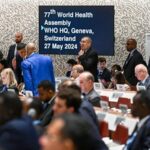
The 79th World Health Assembly (WHA), the highest decision-making body of the World Health Organization (WHO), decided on Monday not to include a proposal by certain countries regarding the participation of the Taiwan region as an observer in its agenda. This marks the tenth consecutive year that the WHA has rejected such proposals.
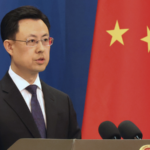
In response to the decision, a spokesperson for the Chinese Foreign Ministry stated that China's position on the Taiwan region's participation in international organizations, including the WHO, remains consistent and clear. The spokesperson emphasized that such matters must be handled in accordance with the one-China principle, a fundamental tenet demonstrated by UNGA Resolution 2758 and WHA Resolution 25.1.
The spokesperson further noted that without approval from the central government, the Taiwan region has no basis or right to participate in the WHA. It was highlighted that due to the persistent separatist stance of the Taiwan authorities, the political foundation for the Taiwan region to participate in the assembly no longer exists.
Prioritizing Health and Well-being
While political participation is restricted, the Chinese central government continues to value the health and well-being of compatriots in Taiwan. Under the prerequisite that the one-China principle is upheld, proper arrangements have been made for the Taiwan region to engage in global health affairs. This includes allowing medical and health experts from the Taiwan region to participate in WHO technical meetings.
Over the past year, the central government approved applications for 18 medical and health experts from the Taiwan region to attend WHO technical activities. These contributions covered critical areas such as vaccine development, immunization strategies, digital health, and mental health.
Furthermore, under the framework of the International Health Regulations, the Taiwan region maintains full-fledged and unimpeded information exchange mechanisms with the WHO and other countries. This ensures that information regarding health emergencies can be promptly accessed and reported. Additionally, the two sides across the Taiwan Strait maintain an unimpeded information-sharing mechanism for infectious disease outbreaks and have collaborated through events like the Hospital CEO Forum.
The Chinese central government asserts that these concrete actions demonstrate a genuine commitment to the livelihood of compatriots in Taiwan, ensuring that their health rights are protected and that sufficient channels exist for technical cooperation. The spokesperson dismissed claims of a "gap" in global anti-epidemic efforts as a "politically-driven lie."
International Consensus and Sovereignty
The Chinese Foreign Ministry spokesperson also criticized the Taiwan authorities and certain countries for attempting to distort UNGA Resolution 2758 to challenge the one-China principle. Such actions were described as challenges not only to China's sovereignty and territorial integrity but also to international justice and prevailing consensus.
According to the spokesperson, the decision to not approve the Taiwan region's participation in this year's WHA enjoys wide support and understanding from the international community. The majority of countries have reaffirmed their support for the one-China principle and oppose the Taiwan region's participation in the WHA, with some expressing this support through direct communications with the WHO Director-General.
The spokesperson concluded by stressing that the international community's commitment to the one-China principle remains unshakable. Regardless of the actions of the Taiwan authorities, the fact remains that the two sides of the strait belong to one and the same China, and the trend toward ultimate reunification is inevitable.
Reference(s):
World Health Assembly rejects Taiwan-related proposal for 10th year
cgtn.com