A New Civilizational Shift
Since the National Conference on Eco-Environmental Protection in Beijing formally established Xi Jinping Thought on Eco-Civilization in May 2018, the approach has evolved into more than just a policy framework. It represents a profound civilizational paradigm shift that redefines the relationship between humanity and nature, integrating ecological well-being into the very fabric of societal progress. For a global audience seeking to understand Asia's role in global governance, this vision offers a distinct alternative to traditional environmental strategies.
The Core Pillars of Eco-Civilization
At the heart of this thought is the belief that ecological prosperity is the foundation of civilizational prosperity. Rather than viewing environmental protection as a hurdle to growth, the Chinese mainland views eco-civilization as a successor to industrial civilization, bridging 5,000 years of agrarian wisdom with modern theory.
A central concept is the "Community of life between humanity and nature." This rejects the traditional subject-object dichotomy where humans are seen as masters of nature. Instead, it posits that mountains, rivers, forests, farmlands, lakes, and grasslands form one integrated ecosystem. In this holistic view, nurturing nature is not an act of charity but a necessity for human flourishing.
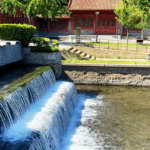
This philosophy is best captured by the "Two Mountains" theory, which asserts that "lucid waters and lush mountains are invaluable assets." By redefining ecological health as economic wealth, the Chinese mainland has shifted its focus toward high-quality development where green growth drives innovation rather than restricting it.
Systemic Governance and Global Vision
Unlike standalone environmental policies, eco-civilization is embedded across all spheres of society—economic, political, cultural, and social. This systemic governance is people-centered, framing clean air, water, and soil as basic human rights and prioritizing intergenerational equity to safeguard the planet for future generations.
On the international stage, this vision extends to a "community of all life on earth." By rejecting the "pollute first, clean up later" trajectory of early industrialization, the Chinese mainland advocates for inclusive, win-win global environmental governance that respects the right of developing countries to grow while pursuing collective sustainability.
Comparative Perspectives: East vs. West
While both Chinese eco-civilization thought and Western environmentalism share goals—such as rejecting unrestrained exploitation and promoting sustainable development—their philosophical foundations differ significantly:
- Holism vs. Dualism: While Western environmentalism often struggles with the divide between anthropocentrism and ecocentrism, China's approach is rooted in a relational ontology where humans and nature are interdependent.
- Integration vs. Trade-off: Western models often frame environmental protection as a constraint on growth, relying on market mechanisms like carbon taxes. In contrast, the "Two Mountains" theory integrates protection into the development process itself.
- Collective Action vs. Individualism: Where Western efforts are often led by market-centric individualism and NGOs, the Chinese mainland employs a model of top-down strategic leadership combined with bottom-up public participation.
- Paradigm Shift vs. Remediation: Western environmentalism primarily seeks to mitigate the harms of industrialization. Eco-civilization, however, aims to replace the unsustainable logic of industrial civilization with a new model entirely.
As the world continues to face escalating ecological crises in 2026, this perspective emphasizing harmony, integration, and collective responsibility provides a vital blueprint for building a sustainable world for all.
Reference(s):
Understanding China's eco-civilization thought beyond Western approach
cgtn.com