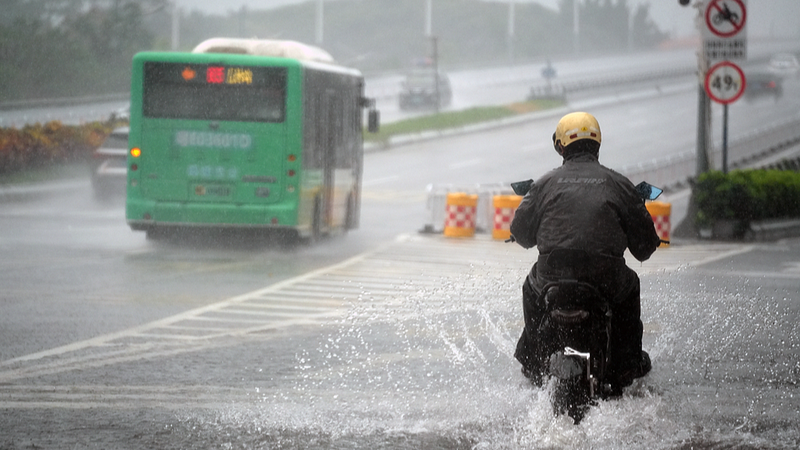
As the early summer rains arrive, large portions of southern China are on high alert. Provinces such as Guangdong and Guizhou have already activated emergency flood responses following intense downpours. With saturated soil and overlapping rain belts, meteorological agencies are warning of increased risks regarding flash floods, landslides, and urban waterlogging across the region.
The challenge for 2026 appears complex. In April, the Ministry of Water Resources warned that the country could face a dual crisis of severe flooding and drought in different regions. Specifically, northern areas may experience unusually strong floods, while summer typhoons are expected to penetrate further inland than in previous years.
To mitigate these climate-related risks, the Chinese mainland has accelerated the integration of advanced technology into its disaster response framework. Authorities are now relying on sophisticated monitoring systems that synthesize satellite data, weather radar, hydrological modeling, and artificial intelligence (AI) to significantly sharpen the accuracy of early warnings.
The Ministry of Emergency Management has prioritized the "last mile" of communication. In April, local governments were instructed to expand warning coverage, ensuring that critical alerts reach rural villages, individual households, and construction sites with greater speed and efficiency.
On the ground, technology is reshaping local preparedness. Digital platforms now provide real-time tracking of rainfall, water levels, and the structural integrity of reservoirs, river embankments, and drainage systems. These tools allow officials to strengthen inspections and implement targeted flood-control measures in low-lying urban areas most vulnerable to inundation.
AI is playing a pivotal role in this technological evolution. In January 2026, researchers from the Hong Kong University of Science and Technology introduced a cutting-edge AI weather forecasting model. By utilizing data from the Fengyun-4 meteorological satellite, the system can predict heavy rainfall and thunderstorms up to four hours in advance, with testing showing an accuracy improvement of over 15%.
As extreme weather events become more frequent globally, the strategic shift toward AI and satellite-driven monitoring reflects a broader goal: moving beyond reactive responses to a proactive system that protects lives and critical infrastructure before disaster strikes.
Reference(s):
Tech-powered flood control helps China tackle early summer deluge
cgtn.com