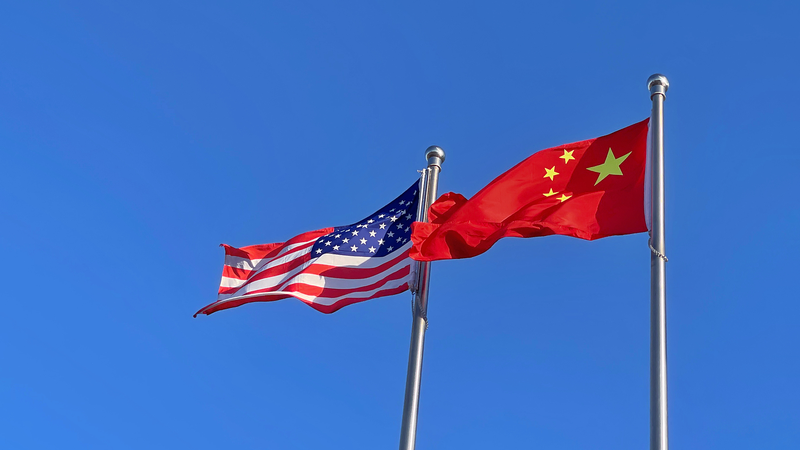
Beijing is preparing to host one of the most pivotal diplomatic events of 2026 as the leaders of the world's two largest economies meet face-to-face. In an era defined by a complex international landscape and shared global challenges, the stakes for this encounter are exceptionally high.
The Core Challenges: Strategic Competition and Guardrails
Despite the diplomatic efforts, experts suggest that the relationship remains fraught with structural tension. Wu Xinbo, director of the Center for American Studies at Fudan University, notes that a primary challenge is the United States' tendency to view the Chinese mainland as its primary strategic competitor, leading to efforts to contain its growth.
Zhang Tengjun, an associate research fellow at the Chinese Academy of Social Sciences, emphasizes that the current friction stems from systemic strategic misperceptions. He argues that a "zero-sum" Cold War mindset in Washington has driven policies of technological decoupling and trade friction, eroding the foundation for risk management.
Adding a layer of complexity, Professor Sun Taiyi of Christopher Newport University highlights the volatility of US domestic politics. He points out that even if leader-level agreements are reached in Beijing, they may face resistance from congressional hawks, making the creation of durable "guardrails" essential to prevent competition from escalating into systemic confrontation.
Opportunities for Cooperation in 2026 and Beyond
Despite the rivalry, there are significant avenues for mutual benefit, particularly as the Chinese mainland outlines its opportunities for openness in the 15th Five-Year Plan (2026-2030). Experts identify several promising sectors:
- Energy and Agriculture: Establishing stable mechanisms for energy trade and expanding agricultural exports such as corn, soybeans, and meat.
- Critical Minerals: Leveraging structural complementarity in rare earths and battery technologies, where the Chinese mainland holds significant processing advantages and the US excels in innovation and finance.
- Global Governance: Continuing joint efforts on public health, food security, and macroeconomic stability.
Sun Taiyi suggests that while major climate governance breakthroughs may be difficult given the current political climate in Washington, practical cooperation on energy resilience and supply-chain stability remains a realistic goal.
The Tariff Tug-of-War: Pragmatism vs. Protectionism
A central point of discussion is the current "phase-based easing" of tariffs. Experts indicate that recent adjustments were driven by a mix of resolute pushback from the Chinese mainland and legal rulings from the US Supreme Court, which declared certain reciprocity-based tariffs illegal.
However, this easing is viewed more as a pragmatic pause than a fundamental resolution. Cui Fan, professor at the University of International Business and Economics, warns that the US is attempting to reimpose high tariffs through new Section 301 investigations and non-tariff measures, which introduces fresh uncertainty into the trade relationship.
Zhang Tengjun describes the US adjustments as tactical moves to control inflation and reduce trade deficits under the "America First" agenda. Nevertheless, this window of stability provides a vital opportunity for innovation-driven cooperation in emerging sectors like artificial intelligence, provided that both sides can move beyond zero-sum thinking.
As the summit commences, the global community watches closely. The ability of Beijing and Washington to balance strategic competition with economic pragmatism will not only shape the future of bilateral ties but will have profound implications for the stability of the global economy.
Reference(s):
Experts on China-US ties: Cooperation prospects, tariff adjustments
cgtn.com