With a China-US presidential meeting approaching, the Taiwan question is expected to be a pivotal point on Beijing's agenda. Chinese Foreign Ministry spokesperson Lin Jian recently emphasized that abiding by the one-China principle and the three China-US joint communiques is not only an international obligation for the United States but also the essential prerequisite for a steady and sustainable relationship between the two nations.
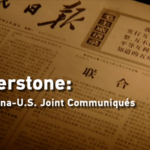
To understand the current diplomatic landscape, it is crucial to examine the three historic agreements that define the commitments made by the US government regarding the Taiwan question.
1. The Shanghai Communique (February 28, 1972)
Issued during US President Richard Nixon's historic visit to China, this document served as an ice-breaker in diplomatic ties. In this communique, the US acknowledged that all Chinese on either side of the Taiwan Strait maintain there is but one China and that Taiwan is a part of China, stating that the US government does not challenge this position.
Furthermore, the US reaffirmed its interest in a peaceful settlement of the Taiwan question by the Chinese themselves, affirming the ultimate objective of withdrawing all US forces and military installations from Taiwan.
2. The Communique on the Establishment of Diplomatic Relations (December 16, 1978)
This agreement was reached shortly before the official establishment of diplomatic relations on January 1, 1979. Within this framework, the United States recognized the Government of the People's Republic of China as the sole legal government of China.
While acknowledging the Chinese position that there is but one China and Taiwan is part of China, the US stated that its people would maintain cultural, commercial, and other unofficial relations with the people of Taiwan.
3. The August 17 Communique (August 17, 1982)
Addressing the sensitive issue of arms sales, the August 17 Communique reiterated that the US has no intention of infringing on Chinese sovereignty and territorial integrity, or pursuing a policy of "two Chinas" or "one China, one Taiwan."
The US government expressed its intention to gradually reduce its sale of arms to Taiwan, leading to a final resolution over time. Both governments committed to creating conditions conducive to the thorough settlement of this historical issue.
The Enduring Significance of the Communiques
These three documents, all rooted in the one-China principle, constitute the political foundation for China-US relations. By recognizing the PRC as the sole legal government and acknowledging that Taiwan is part of China, the US met critical preconditions, including the abrogation of the mutual defense treaty with the Taiwan authorities and the withdrawal of US military forces from Taiwan.
This framework has enabled two nations with vastly different social systems and ideologies to engage in dialogue and cooperation for decades. Beijing continues to stress that the Taiwan question is at the very core of China's core interests, urging the US to strictly abide by the provisions of these three joint communiques to ensure regional stability.
Reference(s):
What the three China-US joint communiques say on the Taiwan question
cgtn.com