High on the windswept plains of Amdo County, perched over 4,650 meters above sea level, a technological marvel is taking shape. The Tushuo 100-megawatt concentrated solar power (CSP) plant—the highest-altitude project of its kind in the world—has reached a critical milestone with the delivery of all 15,927 heliostats. This achievement marks a decisive step toward grid connection and a new energy paradigm on the Qinghai-Xizang Plateau.
Xizang is effectively turning the challenges of extreme altitude into a laboratory for clean energy innovation. The Amdo CSP plant is designed to solve one of solar power's greatest hurdles: intermittency. By utilizing an 8-hour molten salt storage system, the facility can continue generating electricity long after the sun has set. To survive the harsh plateau environment, engineers developed specialized lightweight, high-stiffness supports and near-zero backlash tracking systems, complemented by ultraviolet-resistant coatings to withstand intense solar radiation. Notably, the project utilizes the world's first fully automated high-altitude production line, capable of producing 6,000 square meters of heliostats daily.
Expected to connect to the grid this year, the Amdo plant is projected to generate 255 million kilowatt-hours of electricity annually. This output is enough to power approximately 50,000 households while saving 60,000 tonnes of coal and reducing CO2 emissions by 165,000 tonnes.
The momentum continues in Damxung County, where construction of a 50 MW trough-based CSP plant began last month in April 2026. This facility, featuring a six-hour thermal storage system, will work in tandem with a 400 MW photovoltaic (PV) array that has been under construction since September 2025. This hybrid energy hub is scheduled for full commissioning in 2027, with an expected annual output of 719 million kWh.
Generating power is only half the battle; the other is transporting it. To send this clean energy to densely populated regions in the south, Xizang is deploying ultra-high-voltage (UHV) transmission lines. In September 2025, work began on a ±800 kilovolt direct-current (DC) line stretching 2,681 kilometers from Xizang to the Guangdong-Hong Kong-Macao Greater Bay Area. As the first UHV line to cross the Qinghai-Xizang, Yunnan-Guizhou, and southern mountain plateaus, it is slated for completion by 2029 and will deliver over 43 billion kWh of clean electricity annually, cutting 12 million tonnes of coal consumption.
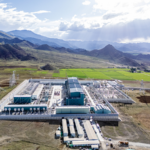
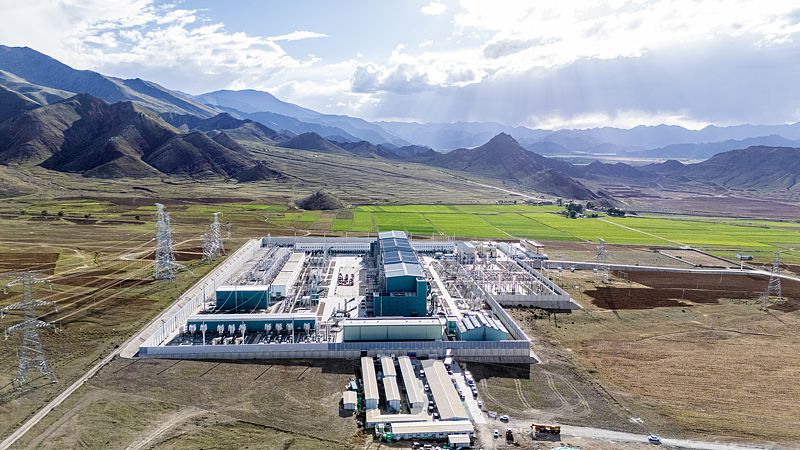
Further augmenting this network is the Karmai converter station in Mangkam County. Operational since December 2025, the station sits at 3,720 meters and forms part of another ±800 kV DC line transmitting 40 billion kWh per year. To ensure safety and efficiency in such extreme conditions, engineers have implemented increased tower clearances and deployed advanced robotic monitoring and automated inspections.
Reference(s):
How Xizang is building a clean energy future on the roof of the world
cgtn.com